If you’ve ever held a smartphone that stayed noticeably cooler than a newer model during an hour-long gaming session, or a gaming laptop that doesn’t sound like a jet engine taking off mid-match, you’ve likely benefited from graphite film—one of the most versatile thermal management materials on the market. As a graphite film supplier, I get asked this question all the time by engineers, product designers, and even curious hobbyists: How exactly does this thin, flexible sheet of carbon conduct heat so much better than almost any other common material? It’s not magic, of course—it’s pure carbon science, and once you break it down, it makes perfect sense. Let’s walk through the molecular structure, the physics of thermal transfer, and why graphite film has become the go-to solution for everything from EV batteries to high-end headphones.
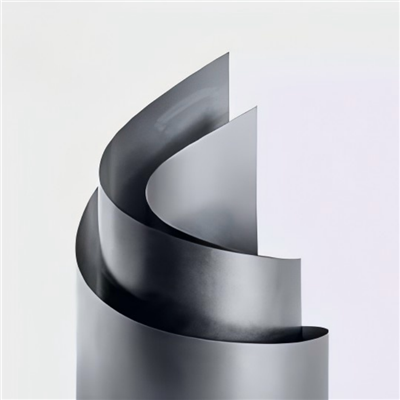
First, let’s start with what graphite actually is, because that’s where all the heat-conducting magic lives. Most people know graphite as the stuff in pencil lead, but that is a heavily compressed mix of graphite clay and binders, not the pure, highly ordered graphite used for thermal applications. Real graphite is a form of carbon that naturally arranges itself into a hexagonal honeycomb lattice, like a sheet of chicken wire, with each carbon atom bonded tightly to three neighboring carbon atoms. This is called a graphene layer—a one-atom-thick sheet of carbon that is already one of the best heat conductors known to man. When you stack millions of these graphene layers on top of each other, with weak van der Waals forces holding them together, you get bulk graphite. But for thermal use, we take that natural structure and refine it to create different types of graphite film, each tailored to specific use cases. For example, our Nanographite Film is made from smaller, more uniformly sized graphene flakes, which gives it exceptional in-plane thermal conductivity while remaining thin and flexible enough to fit into tight spaces.
Now, the key to graphite’s heat-conducting superpower lies in that hexagonal lattice and how heat moves through it. Heat is essentially the vibration of atoms and molecules—when a material gets warm, its atoms jiggle faster, and that energy needs to transfer to neighboring atoms to spread out. In most materials, that transfer is slow because the atomic bonds are irregular or messy, which creates “scattering points” where vibration energy gets lost. Take metals, for example: copper is a good conductor, but its atomic structure is not perfectly uniform, so some of the heat energy dissipates as electrical resistance or sound waves instead of moving through the material. Graphite’s in-plane structure, however, is nearly perfectly ordered. Those strong covalent carbon-carbon bonds in the graphene layers mean that vibrations (called phonons, for the physics nerds) move almost unimpeded along the plane of the graphite sheet. It’s like a highway with no stop signs or traffic lights—heat can zip along the in-plane direction at speeds of up to 2,000 W/m·K, which is way higher than copper’s roughly 401 W/m·K. That’s why graphite film is so effective at spreading heat evenly across a surface, rather than letting it pool in hotspots.
Here’s where it gets even more interesting: graphite’s thermal conductivity is highly anisotropic, which is a fancy way of saying it conducts heat very well in one direction but poorly in the other. The in-plane direction (along the graphene layers) is where all the phonon movement happens, but through-plane direction (perpendicular to the layers) is where the weak van der Waals forces hold the graphene sheets together, and those forces are much weaker, so phonons scatter constantly. That means heat doesn’t move vertically through a graphite film sheet easily, which is actually a feature, not a bug. For most applications, you want to pull heat away from a tiny hotspot (like a phone’s processor) and spread it out across a large surface to dissipate it, rather than letting it sink straight down into the device’s interior. Our Heat-Dissipating Graphite Film is engineered to amplify this anisotropic effect, with a 5:1 or higher ratio of in-plane to through-plane conductivity, making it ideal for thin devices where space is at a premium.
Of course, not all graphite film is created equal. Over the years, we’ve developed specialized variants to meet the unique needs of different industries, each building on that core graphene lattice structure. For applications that need both high thermal conductivity and mechanical stability, our Composite Graphite Film combines pure graphite with small amounts of polymer or ceramic fillers, which add durability and resistance to bending without sacrificing heat transfer. This is perfect for foldable smartphones, where the flexible screen needs a thermal solution that won’t crack or delaminate after thousands of folds. For higher-power applications, like electric vehicle battery packs or server CPUs, we’ve created our Multi-Layer Composite Graphite Film, which stacks multiple graphite layers with a thin adhesive between them. The adhesive is engineered to not block phonon transfer, so you get the combined high conductivity of multiple layers without the heat loss you’d expect from a regular adhesive.
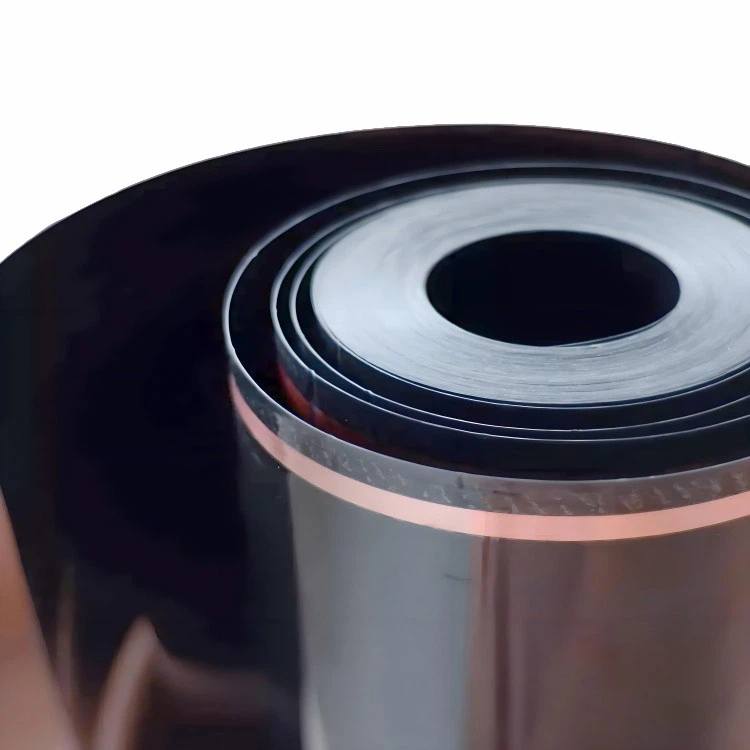
I often get asked why we use graphite film instead of just plain graphite paper or bulk graphite. The difference comes down to grain size and alignment. When you process graphite into thin film, you can align the graphene layers perfectly during production, which maximizes that in-plane thermal conductivity. If you just press bulk graphite into a sheet, the graphene layers are randomly oriented, so the heat transfer is much more uneven. Our Graphite Thin Film, for example, is only a few microns thick, with graphene layers aligned to within 0.5 degrees of each other, giving it an in-plane conductivity of over 1,800 W/m·K—almost as high as pure, synthetic graphene itself. That’s the kind of performance you need for high-end graphics cards, where even a 10% drop in thermal conductivity can lead to throttling and reduced performance.

Let’s talk about a real-world example to make this concrete. A few months ago, we worked with a startup that was developing a compact portable charger with a 45W fast-charging chip. The original design used a copper heat sink, but it was too bulky, and the charger got so hot that it was uncomfortable to hold. When they swapped in our Heat-Dissipating Graphite Film, they were able to reduce the heat sink size by 60% and cut the device’s surface temperature by 12 degrees Celsius. Why? The copper was only spreading heat a few millimeters from the chip, but the graphite film spread that same heat across the entire top surface of the charger, where it could dissipate into the air faster. That’s exactly the anisotropic property at work—heat moves along the graphite, not through it, so it’s spread out instead of concentrated.
Another common question: how does graphite film compare to other thermal materials like thermal paste, phase-change materials, or heat pipes? Thermal paste works by filling gaps between two surfaces, but it only has moderate conductivity (around 8 W/m·K) and can dry out over time, losing performance. Heat pipes are great for high-power applications, but they’re bulky, fragile, and can’t be used in very small spaces like smartwatches or wireless earbuds. Graphite film is thin, flexible, lightweight, and has way higher conductivity than paste. The only downside is that it’s not as good at transferring heat across a gap, so you usually pair it with a small amount of thermal adhesive to make a complete thermal interface material (TIM).
Now, let’s get into the production side, because that’s where we refine graphite from its raw form into the high-performance film our customers rely on. The process starts with either synthetic polyacrylonitrile (PAN) or natural graphite flakes. We purify the raw material to remove impurities like sulfur and metal ions, which would create scattering points for phonons and reduce conductivity. Next, we expand the graphite at high temperatures, which separates the graphene layers. We then process the expanded graphite into a slurry, cast it into thin sheets, and compress it under high pressure to align the graphene layers. For our nanographite film, we use smaller, more uniform flakes to get even better alignment, while our multi-layer film adds a secondary compression step to ensure the layers are perfectly stacked. Every batch is tested for thermal conductivity, thickness, and flexibility to make sure it meets our strict standards.
As a graphite film supplier, I’ve seen how this material has evolved over the past decade. Ten years ago, graphite film was mostly used in smartphones and small consumer electronics, but now it’s used in everything from EV battery thermal management to LED lighting, medical devices like MRI machines, and even satellite components. The demand for better, smaller, lighter thermal solutions is only going to grow as devices get more powerful and thinner, and graphite film is perfectly positioned to meet that demand.
If you’re an engineer or product designer working on a project that needs better thermal performance, I encourage you to reach out to our team to discuss your specific needs. Whether you need a thin film for a foldable device, a multi-layer composite for a high-power battery, or a custom-sized sheet for a medical application, we can help you find the right graphite film solution. We work with customers across industries, and we’re always happy to test sample batches to make sure our film fits your requirements. Don’t hesitate to contact our team to start your next thermal management project—we’re here to help you build products that run cooler, last longer, and perform better.
References
- Balandin, A. A. (2011). Thermal properties of graphene and nanostructured carbon materials. Nature Materials, 10(8), 569-581.
- Zhang, Y., et al. (2018). Anisotropic thermal conductivity of highly oriented graphite films. Carbon, 134, 242-250.
- Moore, A. L., & Shi, L. (2014). Emerging challenges and materials for thermal management of electronics. Materials Today, 17(4), 163-174.
- Liu, J., et al. (2020). Composite graphite films for thermal management applications: A review. Journal of Materials Science: Materials in Electronics, 31(24), 21357-21378.