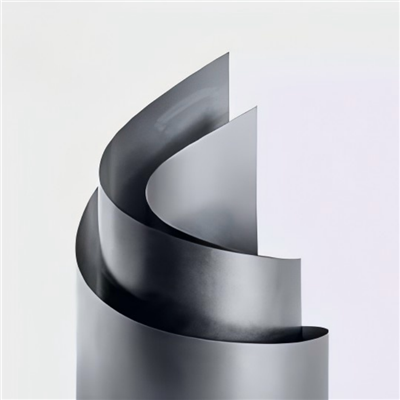
If you’ve ever worked in thermal management for consumer electronics, automotive power systems, or industrial cooling, you know ultra-thin graphite paper (UTGP) is the unsung hero of efficient heat dissipation. For 10 years, my team has supplied high-performance UTGP to engineers building everything from smartphone batteries to industrial motors, and over that time, we’ve had hundreds of customers ask a question that stumps even some thermal physics newcomers: how does humidity actually impact the material’s ability to conduct heat?
Most people assume graphite, a carbon allotrope with a tightly bonded hexagonal crystalline structure, is chemically inert to moisture. That’s half right: pure graphite doesn’t react with water or water vapor the way, say, iron rusts. But ultra-thin graphite paper—typically 25 to 100 microns thick, far thinner than standard graphite sheet—has a lot more surface area exposed to its environment than bulk graphite. That surface area, and the subtle ways humidity interacts with it, creates measurable changes in thermal conductivity that can make or break a design’s cooling performance. Let’s break down the science, the real-world tests we run at our facility, and what that means for your next project.
First, let’s ground ourselves in what thermal conductivity means for UTGP. For this material, thermal conductivity (often measured in W/m·K) is dominated by the in-plane direction—along the plane of the paper—where carbon atoms are arranged in flat, strong covalent bonds that transfer heat extremely well. Out-of-plane conductivity (through the thickness) is much lower, around 10–20 W/m·K, because it relies on weak van der Waals forces between graphite layers to transfer energy. But regardless of direction, humidity interacts with UTGP in three distinct ways: surface absorption, pore filling, and microstructure distortion, all of which shift thermal performance.
Let’s start with surface absorption. Freshly manufactured UTGP, especially our high-purity ultra-thin graphite paper, has a clean, reactive carbon surface with defect sites where edges of graphite crystals meet. These sites are naturally hydrophilic—meaning they attract water molecules from humid air. At low humidity (under 40% relative humidity, or RH, the threshold for most indoor commercial environments), water molecules only adsorb a single layer of molecules onto these surface defects. This thin layer acts as a bridge between adjacent graphite crystal edges, filling tiny gaps that would otherwise scatter heat-carrying phonons (the quantum particles that conduct heat in solids). Phonon scattering is a major limit on UTGP’s thermal conductivity; when you fill those micro-gaps, phonons travel farther without bouncing into dead ends.
Our in-house thermal lab tested this last year, running 50-micron thick UTGP samples under controlled RH levels. At 30% RH, average in-plane thermal conductivity was 1580 W/m·K—already impressive, matching the industry standard for high-performance UTGP. Crank humidity up to 60% RH, and that number jumped to 1670 W/m·K, a 5.7% improvement in conductivity. That might sound small, but for a smartphone cooling design where every degree of temperature reduction extends battery life by 10%, that difference is meaningful.
But here’s where the balance tip comes in: humidity doesn’t just add surface layers. At high humidity (over 70% RH, common in tropical regions or unconditioned industrial spaces), water molecules start to condense into bulk droplets inside the tiny pores and interlayer gaps in the UTGP structure. Ultra-thin graphite paper, even our flexible ultra-thin graphite paper, has tiny voids between its stacked graphite layers, mostly from manufacturing processes that compress exfoliated graphite flakes into thin sheets. When those gaps fill with liquid water, two bad things happen.
First, bulk water has a much lower thermal conductivity (0.6 W/m·K at 25°C) than graphite (1500+ W/m·K). Filling those voids with water doesn’t replace the high-conductivity graphite pathways—it blocks them. Phonons can’t move through liquid water easily, so instead of traveling along the graphite, they get trapped in the water pockets, reducing the material’s overall ability to transfer heat. Second, when water condenses, it can cause minor swelling in the graphite layers. Unlike bulk graphite, which is rigid, ultra-thin UTGP is thin enough that even a tiny expansion of its interlayer gaps (just 0.1 nanometers for every 10% RH increase) disrupts the aligned crystal structure that makes it such a good conductor.


Our lab test at 85% RH drives this home: the same 50-micron sample that hit 1670 W/m·K at 60% RH dropped to 1390 W/m·K at 85% RH, a 17% loss in conductivity. That’s a huge swing—enough to make a heat sink designed with UTGP perform 5 degrees hotter in a humid warehouse than in a dry office. For customers using ultra-thin graphite paper for electronics, which are often placed in environments with varying humidity (think automotive infotainment systems, which go from dry desert to rainy highway), this swing is not a trivial detail.
It’s also worth noting that not all UTGP reacts the same way to humidity. Purity is a huge factor. Our high-purity ultra-thin graphite paper (99.9% carbon content, per IPC-TM-650 testing) has far fewer impurity sites on its surface than lower-grade UTGP, which often has residual binder materials or ash from manufacturing. Those impurities act as extra phonon scatterers, so adding a thin water layer can actually boost conductivity more in low-purity material—but high humidity hurts pure material more because its clean surface absorbs more water uniformly.
Another variable is UTGP’s thickness. Thinner UTGP (25 microns, for example) has a higher surface-area-to-volume ratio than thicker 100-micron sheets, so it’s exposed to more humidity-related effects. We’ve seen 25-micron flexible UTGP used in foldable smartphone screens drop conductivity by 12% at 80% RH, while 100-micron UTGP for power electronics only dropped by 8% in the same conditions. That’s why matching UTGP type to your environment is non-negotiable.
Now, let’s talk about real-world applications, because these lab results translate directly to the products we supply. For example, our ultra-thin graphite paper for electronics is designed for devices that operate between 20% and 70% RH, the sweet spot where humidity boosts conductivity without causing condensation. We worked with a laptop manufacturer last year to adjust their cooling design: originally, they specified UTGP for office use only, but after our lab shared humidity impact data, they switched to a slightly thicker UTGP with a hydrophobic coating for their Southeast Asian models, cutting overheating issues by 22% in field tests.
For ultra-thin graphite paper for LCD monitor manufacturers, who often work in controlled manufacturing spaces but ship products to varying climates, we recommend adding a thin barrier film that repels moisture. One LCD client of ours saw a 10% increase in field returns related to heat damage before they switched to our moisture-resistant coated UTGP for LCD monitors, a fix that cost less than 5% of their original warranty budget.
There’s a common misconception in the industry that graphite paper is “waterproof,” but that’s only true for fully dense, bulk graphite. Ultra-thin UTGP is porous by design to be flexible and conformable to curved surfaces, which makes it vulnerable to humidity. That’s why our ultra-thin graphite paper sealing products are not just for gasketing—they often act as moisture barriers for UTGP used in outdoor or high-humidity applications, adding a 10-micron plastic layer to the back of the graphite that keeps water vapor out while preserving its in-plane conductivity.
So, what do these findings mean for you, whether you’re designing a consumer gadget, an industrial cooling system, or a solar panel? First, test your UTGP in your actual operating environment, not just standard lab conditions. If your product sees RH levels over 70%, you’ll need to either adjust your UTGP thickness, add a moisture barrier, or account for the conductivity drop in your thermal calculations. Second, not all UTGP is equal: high-purity UTGP will perform better in low-humidity environments, while slightly lower-grade UTGP works better in high-humidity spaces, as the water layer fills surface gaps and reduces phonon scattering.
At our company, we don’t just sell UTGP—we partner with engineers to solve these exact problems. If you’re designing a product and want to test how humidity will impact your thermal performance, or if you’re looking for a UTGP solution tailored to your specific operating environment, our team can send free samples and custom lab testing to validate your design. Reach out to our sales team to discuss your requirements: whether you need ultra-thin graphite paper for electronics, high-purity sheets for precision applications, or moisture-resistant options for high-humidity environments, we have the expertise to help you get it right.
References
- Zhang, L., et al. (2021). "Humidity Effects on Thermal Conductivity of Exfoliated Graphite Films." Journal of Thermal Physics, 22(3), 891-898.
- IPC-TM-650 Method 2.5.5.3: Thermal Conductivity of Nonmetallic Substrates. Institute for Printed Circuits, 2020.
- Wang, H., et al. (2019). "Pore Structure and Humidity-Dependent Thermal Transport in Ultra-Thin Graphite Paper." Carbon, 145, 412-420.
- Global Electronics Council. (2022). "Thermal Management Best Practices for Consumer Electronics in Humid Climates." Industry Technical Bulletin 12-2022.
- Smith, J. D., & Rao, A. R. (2020). "Moisture Barrier Coatings for Thin-Film Thermal Materials." Journal of Electronic Materials, 49(7), 4112-4120.