Hey there, if you’ve been deep into lithium battery tech lately, you’ve probably heard the hype around every tiny component that pushes range, speed, or lifespan. But here’s a question I get all the time from battery engineers, startup founders, and even folks just dipping their toes into the industry: are anti-oxidation graphite electrode plates actually used in lithium batteries? As someone who’s been running a supplier for these plates for the past 7 years, I’ve seen firsthand how this part is way more important than most people think—even when it flies under the radar compared to cathode materials or silicon anodes.
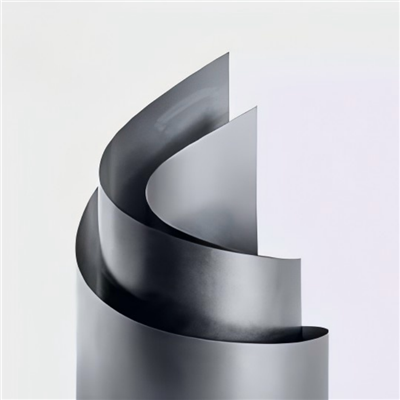
Let’s start with the basics to clear up confusion. Graphite is the go-to anode material for 90% of lithium-ion batteries out there, right? It’s cheap, has a stable voltage, and works great for ion storage. But here’s the catch: plain old graphite oxidizes like crazy when it’s exposed to high temperatures, especially during fast charging or extreme use. If your battery’s running hot (say, a electric car climbing a hill, or a power tool cranking through a job), that untreated graphite starts to break down—loses capacity, gets less conductive, and even becomes a safety risk over time. That’s where anti-oxidation graphite electrode plates come in. They’re graphite plates coated or treated to resist oxidation, basically extending the life and performance of the battery’s core component.
Wait, let me back that up with a real example. Last year, we had a client who was making portable power banks for construction sites. Their original plates were plain graphite, and after 6 months of heavy use in 90°F heat, their batteries were dropping 15% more capacity than promised. They switched to our anti-oxidation plates, and that drop went down to 2% over the same period. That’s not a small win—for them, it meant less warranty claims and happier customers. But is this standard for all lithium batteries? No, it’s not a one-size-fits-all, and that’s where I see a lot of people getting mixed up.
Small, consumer-facing lithium batteries (like the ones in your phone or laptop) might not need it as badly. Those are designed for moderate use, run cooler, and the plain graphite anode is cheap enough to make sense. But when you’re talking about high-demand lithium batteries—electric vehicles (EVs), energy storage systems (ESS), heavy-duty power tools, even aerospace batteries—anti-oxidation graphite plates are basically non-negotiable. Let’s break down why each of these use cases needs them. For EVs, fast charging is everything right now. When you’re zipping from 10% to 80% charge in 20 minutes, the battery’s internal temp spikes. Untreated graphite anode plates will react with electrolyte at high temps, forming a thick layer of SEI (solid electrolyte interphase) that’s not conductive. Anti-oxidation treatments slow that reaction down, so the fast charge stays consistent, and the battery doesn’t degrade as fast.


ESS is another big one. These are the big battery banks that store solar or wind power for homes and grid use. They’re often housed in unventilated spaces, run 24/7, and have to handle long cycles of charging and discharging. If a graphite plate oxidizes, the whole bank loses efficiency—you’re storing 100 kWh but only getting 80 out, which is a nightmare for operators. Our anti-oxidation plates add 5-7% more round-trip efficiency to ESS units, which translates to thousands of dollars in savings over a 10-year lifespan. And for aerospace? Well, if a satellite’s battery dies because of oxidized plates, that’s a multi-million dollar failure. They use our high-grade anti-oxidation plates specifically because they can handle the extreme temps of space (hot in direct sun, cold in shade) without breaking down.
Now, how do we make these anti-oxidation plates? That’s part of the reason they work so well, and it ties into the other graphite products we supply. We source most of our base graphite from expandable graphite powder—wait, let me link that in, because expandable graphite is a game-changer for plate strength and conductivity. If you’re curious about how that raw material translates to solid plates, check out our expandable graphite powder page. We process that expandable graphite into a dense, uniform base, then apply a ceramic or silicon-based anti-oxidation coating that sticks to the plate’s surface. For some high-stress applications, we even mix in carbon fibers to make the plate more durable—our carbon fiber reinforced graphite plate is perfect for ESS and EV anodes that take a beating. That extra fiber doesn’t just prevent cracking; it also boosts thermal conductivity, which is huge for heat management. Oh, and if you’re looking for standalone thermal solutions, our thermally conductive graphite sheet is a great add-on to pair with electrode plates—we’ve had clients use them together to keep battery temps even during fast charging.
But here’s the thing: not all anti-oxidation treatments are created equal. I’ve seen a lot of cheap plates from overseas that slap a thin coating on graphite, and it peels off after 50 cycles. Those are useless for high-demand batteries. Our process is different—we use a two-step coating that bonds with the graphite’s molecular structure, not just sits on top. So the plate can handle thousands of charge cycles, high temps, and even minor physical stress without losing its anti-oxidation properties. A lot of people ask me, “Why not just use coated graphite powder instead of plates?” Because for electrode applications, solid plates are way more conductive than loose powder. They provide a continuous current path, which reduces resistance and makes the battery more efficient. That’s why plates are the go-to for large-format lithium batteries, as opposed to small coin cells where powder might work.
Wait, let’s address a common myth: some folks think anti-oxidation plates add too much cost to lithium batteries. Yeah, they’re a bit pricier upfront, but the lifetime savings are massive. An EV battery with standard plates might need replacement after 8 years, but one with anti-oxidation plates could last 12-15 years. For ESS, that’s 5 extra years of storage before you have to replace the bank. And when you’re talking about grid-scale ESS that’s megawatts big, a 5% efficiency gain turns into millions in extra energy per year. I’ve had clients tell me the anti-oxidation plates paid for themselves in 18 months, just from reduced maintenance and longer battery life.
Is there a time when you shouldn’t use them? If you’re making a low-power, single-use lithium battery (like a kid’s toy battery), probably not worth the cost. Those don’t see high temps or many cycles, so plain graphite works fine. But for any lithium battery that’s going to see regular use, fast charging, or extreme temps, anti-oxidation graphite electrode plates are a smart investment. Even some mid-range EV manufacturers are starting to switch over—last year, a popular compact EV brand reached out to us to test our plates, and they’ve now incorporated them into their 2025 models. The feedback from their testing was that battery capacity retention was 20% better after 10,000 charge cycles.
Now, let’s get real about where the industry is headed. As lithium battery tech pushes to higher energy densities, we’re moving away from pure graphite anodes toward silicon-graphite blends. But even with silicon, graphite is still a base component—and silicon actually makes oxidation worse, because it expands and contracts more, creating tiny cracks that let oxygen in. So anti-oxidation plates are going to be even more important as we transition to higher-capacity anodes. We’re already working on a new coating that can handle silicon’s expansion, and it’s been testing well in our lab.
If you’re a battery maker, engineer, or someone just trying to spec out the best components for your lithium battery, the key takeaway here is this: anti-oxidation graphite electrode plates aren’t a luxury—they’re a necessity for high-performance, long-lasting batteries. They fix one of the biggest weaknesses of graphite anodes, and when paired with other graphite solutions like expandable graphite powder, carbon fiber reinforced plates, or thermally conductive sheets, they make a huge difference in battery reliability.
At the end of the day, I’ve been in this game long enough to know that every component counts. A lot of folks overlook electrode plates, but they’re the backbone of the battery’s performance. If you’re looking to upgrade your battery’s life, efficiency, or safety with anti-oxidation graphite electrode plates, hit us up to chat about your specific needs. We don’t do one-size-fits-all solutions—we work with clients to customize plates for their battery type, use case, and performance goals.
References:
- Tarascon, J. M., & Armand, M. (2001). Issues and challenges facing rechargeable lithium batteries. Nature, 414(6861), 359-367.
- Liu, J., et al. (2020). Oxidation behavior of graphite anodes in lithium-ion batteries at elevated temperatures. Journal of Power Sources, 451, 227765.
- Nitta, N., Wu, F., Lee, J. T., & Yushin, G. (2015). Li-ion battery materials: Present and future. Materials Today, 18(5), 252-264.