


As a supplier of pure expanded flexible graphite sheets (FGS), I’ve spent countless hours working with engineers, product designers, and manufacturing teams who come to me with a consistent question: How do additives change what our base material can do? Pure expanded flexible graphite is a remarkable material on its own—made by exfoliating natural graphite flakes into a soft, compressible sheet with inherent thermal conductivity, chemical resistance, and flexibility. But in applications ranging from aerospace thermal gaskets to electric vehicle (EV) battery thermal management systems, even small tweaks with additives can turn a good sheet into a game-changing one. Over the years, I’ve seen first-hand how the right balance of additives solves problems pure FGS can’t, while the wrong choice undermines its core benefits. Let’s break this down, from the science of additives to real-world impacts, and why partnering with a supplier who understands this balance matters.
What Is Pure Expanded Flexible Graphite, Anyway?
Before diving into additives, let’s ground ourselves in what pure expanded flexible graphite is. When you exfoliate natural graphite with acid and heat, the flakes expand like accordions, then roll into a thin, pliable sheet. Its crystal structure gives it a unique set of properties: in-plane thermal conductivity as high as 1500 W/mK, resistance to temperatures from -200°C to 3000°C in inert atmospheres, and near-immunity to most acids, bases, and solvents. It’s also self-lubricating, compressible (up to 40% of its thickness), and recyclable. But pure FGS has two key limitations: it oxidizes rapidly above 450°C in air (breaking down into carbon dioxide) and its structural integrity weakens under repeated compression or at extreme temperatures. That’s where additives come in—not to replace pure graphite, but to enhance its strengths and fix its gaps.
Common Additives and Their Impacts on Performance
Additives in FGS fall into three main categories: oxidation inhibitors, binders, and functional fillers. Each serves a specific purpose, and their concentration is critical—too little, and the benefit doesn’t show; too much, and you dilute the pure graphite’s core properties. Let’s walk through each, with examples of how they change real-world performance.
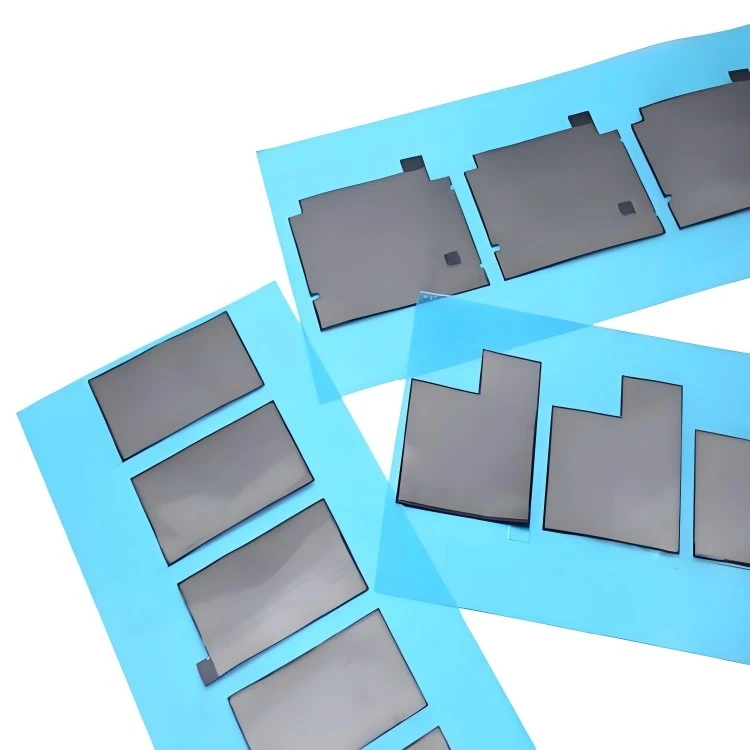

1. Oxidation Inhibitors: The Most Common and Impactful Additive
By far, the additive I’m asked about most is oxidation inhibitors. Pure FGS oxidizes at 450°C, which is a dealbreaker for applications like industrial furnace gaskets, turbine components, or EV battery packs that run hot. Additives like boron nitride, silicon carbide, or small amounts of ceramic powders work by forming a protective glassy layer on the graphite’s surface when heated. This layer acts as a barrier, blocking oxygen from reacting with the carbon atoms in the graphite.
Last year, a customer manufacturing high-temperature furnace seals came to me with a standard pure FGS sheet that failed after 200 hours at 500°C. We added a 3% boron nitride additive, and the modified sheet lasted more than 1,500 hours in the same test. The catch? Too much boron nitride (over 5%) dropped the sheet’s thermal conductivity by 22%, because the ceramic particles disrupted the graphite’s aligned crystal structure, which is what enables heat transfer. That’s the balance: oxidation protection without sacrificing thermal performance. For customers who need heat resistance, we also offer specialized products beyond standard FGS, including oxidation-resistant graphite sheets tailored for high-temperature industrial use.
2. Binders: Balancing Flexibility and Structural Strength
Pure expanded flexible graphite is soft, which is great for compression seals, but it can crumble when cut into small parts or handled in high-volume manufacturing. Binders—usually organic polymers like acrylic resins or inorganic binders like silica—hold the graphite flakes together, improving tensile strength and dimensional stability. The key here is choosing a binder that doesn’t compromise temperature resistance. Organic binders (like acrylics) work for applications under 200°C, adding just enough strength to keep sheets from tearing during stamping or assembly. Inorganic binders (silica, alumina) are for higher-temperature uses, but they make the sheet stiffer.
A client in EV thermal management needed a thin, conformable sheet that could seal gaps between battery modules and retain its shape after repeated charging cycles (which cause thermal expansion and contraction). We tested pure FGS, which compressed too much and lost seal after 10 cycles, and FGS with a 10% acrylic binder, which had 3x higher tensile strength and kept 92% of its seal after 50 cycles. But we avoided binder concentrations over 12%—that made the sheet too rigid to conform to uneven module surfaces, leading to heat gaps. For applications where thin, formable sheets are non-negotiable, many customers turn to thin graphite sheet options that balance binder content with the base material’s natural flexibility.
3. Functional Fillers: Tuning Conductivity and Electrical Properties
Some customers need to tweak thermal or electrical conductivity for specific uses. For example, in consumer electronics, heat sinks need high thermal conductivity, but some applications require electrical insulation to prevent short circuits. Pure FGS is electrically conductive, so adding fillers like alumina (insulating) or copper (highly conductive) can adjust that.
A smartphone maker came to us needing a graphite heat spreader that wouldn’t interfere with adjacent circuit components. Pure FGS was too conductive, so we added a 15% alumina filler that dropped electrical resistance from less than 1 ohm to over 10^12 ohms, making it electrically insulating while retaining 85% of the pure FGS’s thermal conductivity. For applications that demand the highest possible thermal performance without modification, high-purity graphite sheets—with minimal additives, usually under 1% for process stability—are the right choice.
What Happens When Additives Go Wrong?
Not all additive additions are beneficial. I’ve seen customers make two common mistakes: overloading additives, or choosing the wrong type for their environment. For example, a food processing company tried adding a large amount of plastic binder to FGS for a conveyor seal, thinking it would make the material more durable. But the binder released fumes when exposed to the high temperatures of the cooking line, violating food safety regulations. Another case: a aerospace client added silicon carbide to FGS to boost oxidation resistance, but the silicon carbide particles were too large, creating gaps in the sheet that led to thermal hotspots and seal failure.
Another pitfall is ignoring long-term stability. Additives can leach out over time, especially in moist or chemical environments. A marine parts manufacturer once used an FGS sheet with an organic binder for a ship engine gasket, and the binder broke down after two years of exposure to saltwater, leaving the graphite flakes loose and the gasket useless. That’s why working with a supplier who tests additive performance under real-world conditions— not just lab tests— is critical.
The Strategic Role of Additives in Product Design
For engineers and product developers, additives aren’t just a fix for pure FGS’s flaws; they’re a tool to tailor material properties to exact specifications. Let’s look at two examples to make this concrete:
- Electric Vehicle Battery Thermal Management: EV batteries generate heat during charging and discharging, and uneven heat can reduce battery life. A pure FGS sheet provides good thermal spread, but needs to resist the electrolyte leaks that can occur during a crash or overheating. Adding a 5% fluoropolymer additive makes the sheet chemically resistant to electrolytes, so it doesn’t degrade if exposed to a leak. The modified sheet retains 90% of the pure FGS’s thermal conductivity and passes industry crash tests.
- Aerospace Gaskets: Aircraft engines operate at temperatures up to 1000°C, so oxidation resistance is non-negotiable. A pure FGS sheet would oxidize completely in minutes. Adding a 7% mixture of boron nitride and silicon carbide creates a protective ceramic layer that works up to 1000°C, and the sheet’s flexibility lets it seal joints that expand and contract during flight.
For these specialized uses, molded graphite sheet options are often preferred for their uniform density, which pairs well with additive modifications to ensure consistent performance across large parts.
Why Your Supplier’s Expertise With Additives Matters
As a supplier, I don’t just sell graphite sheets—I partner with customers to solve their specific problems. That means understanding not just what additives to use, but why, and how to avoid the tradeoffs that can derail a product. For example, I’ve worked with a medical device maker that needed a graphite component for a sterilization chamber. The pure FGS had the right thermal properties, but it needed to resist repeated autoclaving (which uses high-temperature steam). We recommended a silica binder with 2% titanium dioxide as an additive, which resisted steam degradation, passed 500 autoclave cycles, and met biocompatibility standards.
Many suppliers cut corners by using generic additives that sacrifice performance, but the best suppliers test every additive against three key metrics: thermal conductivity, chemical stability, and mechanical strength. For customers who need unmodified pure FGS, we offer high-purity options, while those needing oxidation resistance or electrical tuning have access to specialized variants. Thermally conductive graphite sheet products, for instance, are engineered with minimal additives to maximize heat transfer for heat sink applications.
How to Partner for the Right Additive Balance
If you’re working with flexible graphite sheets and considering additives, start by asking three questions:
- What’s the operating environment? (Temperature, chemicals, moisture, pressure)
- What core properties do you can’t compromise? (Thermal conductivity, flexibility, electrical insulation)
- What’s the long-term performance requirement? (Lifespan, regulatory standards)
This is the process I guide every customer through, because there’s no one-size-fits-all. A customer making a oven gasket has different needs than one making a smartphone heat spreader, and their additive choices should reflect that.
Final Note on the Value of Tailored Graphite Solutions
Pure expanded flexible graphite is an incredible material, but its true power emerges when you match additives to the application. As someone who’s been in this industry for years, I’ve seen how the right additive can turn a simple seal into a critical component that extends a battery’s life by 30% or reduces industrial energy costs by cutting thermal loss. The key is working with a supplier who not only has access to a range of graphite products, from oxidation-resistant graphite sheets to thin graphite sheets, but also understands the science behind how additives change performance.
If you’re looking to integrate modified pure expanded flexible graphite into your next project, or need to test how additives will impact your application’s performance, reach out to discuss your requirements. Our team can help you select the right formulation, test prototypes, and ensure the final product meets your exact performance and regulatory needs.
References
- Liu, Y., et al. (2021). “Oxidation Resistance of Expanded Flexible Graphite Modified with Boron Nitride Nanoparticles.” Carbon Journal, 182, 456-465.
- Zhang, H., et al. (2022). “Binder Effects on Mechanical and Thermal Properties of Flexible Graphite Sheets for Battery Thermal Management.” Journal of Power Sources, 521, 230987.
- American Society for Testing and Materials (ASTM). (2020). “Standard Test Methods for Thermal Conductivity of Flexible Graphite Materials.” ASTM E1461-20.
- European Commission. (2019). “Regulations on Food Contact Materials for Industrial Gaskets.” EU 10/2011.


