


Flame-retardant graphite film has gained significant attention in various industries due to its excellent thermal conductivity, electrical conductivity, and flame retardancy. However, in some applications, improving the transparency of this film can open up new possibilities. As a supplier of Flame-Retardant Graphite Film, we are constantly exploring ways to enhance its transparency. In this blog, we will discuss some effective methods to achieve this goal.
Understanding the Structure and Properties of Flame - Retardant Graphite Film
Before delving into the methods of improving transparency, it is essential to understand the structure and properties of flame - retardant graphite film. Flame - retardant graphite film is typically composed of graphite layers with flame - retardant additives. Graphite itself has a layered structure, which contributes to its high thermal and electrical conductivities. The flame - retardant additives are usually inorganic compounds that can prevent or slow down the spread of fire.
The opacity of flame - retardant graphite film is mainly due to the scattering and absorption of light by the graphite layers and additives. The graphite layers have a high degree of crystallinity, which can cause light to scatter in different directions. The flame - retardant additives may also absorb certain wavelengths of light, further reducing the transparency of the film.
Methods for Improving Transparency
1. Controlling the Thickness of the Film
One of the simplest ways to improve the transparency of flame - retardant graphite film is to control its thickness. As the thickness of the film decreases, the amount of light that can pass through it increases. We can use advanced manufacturing techniques to produce thinner films without sacrificing their mechanical and functional properties. For example, [1] shows that by reducing the thickness of the graphite film from 100 microns to 50 microns, the transparency of the film can be increased by approximately 20%.
However, reducing the thickness too much may lead to a decrease in the mechanical strength of the film. Therefore, a balance needs to be struck between transparency and mechanical properties. Our company has been investing in research and development to optimize the thickness of our Flame - Retardant Graphite Film to achieve the best possible transparency while maintaining its performance.
2. Selecting Appropriate Flame - Retardant Additives
The choice of flame - retardant additives can also have a significant impact on the transparency of the film. Some additives may be more transparent than others due to their chemical structure and optical properties. For instance, certain organic flame - retardant additives may have a lower light absorption coefficient compared to inorganic additives.
When selecting flame - retardant additives, we need to consider not only their transparency but also their compatibility with the graphite matrix. The additives should be well - dispersed in the graphite layers to avoid forming large agglomerates that can scatter light. Our team of researchers is constantly exploring new flame - retardant additives and optimizing their dosage to improve the transparency of our films.
3. Surface Modification
Surface modification is another effective method to enhance the transparency of flame - retardant graphite film. By modifying the surface of the film, we can reduce the surface roughness and improve the light - transmission properties. One common surface modification technique is the application of a transparent coating. The coating can smooth the surface of the film and reduce the reflection and scattering of light.
There are various types of transparent coatings available, such as polymer coatings and metal oxide coatings. Polymer coatings are relatively easy to apply and can provide good adhesion to the graphite film. Metal oxide coatings, on the other hand, may offer better hardness and chemical resistance. Our company has developed several surface modification processes for our Flame - Retardant Graphite Film to improve its transparency and other surface properties.
4. Nano - Structuring
Nanostructuring the flame - retardant graphite film is a promising approach to improve its transparency. By creating nanoscale structures on the surface or within the film, we can manipulate the interaction between light and the film. For example, creating a periodic nanostructure on the surface of the film can diffract light in a controlled manner, reducing the scattering and increasing the transparency.
Nanostructuring can be achieved through various methods, such as etching, lithography, and self - assembly. Our research team is actively working on developing nanostructuring techniques for our Flame - Retardant Graphite Film. By combining nanostructuring with other methods, such as controlling the thickness and selecting appropriate additives, we aim to significantly improve the transparency of our products.
Potential Applications of Transparent Flame - Retardant Graphite Film
Improving the transparency of flame - retardant graphite film can open up a wide range of applications. In the electronics industry, transparent flame - retardant graphite film can be used as a heat - dissipation material for displays, touchscreens, and other transparent electronic devices. It can effectively transfer heat away from the device while maintaining its transparency.

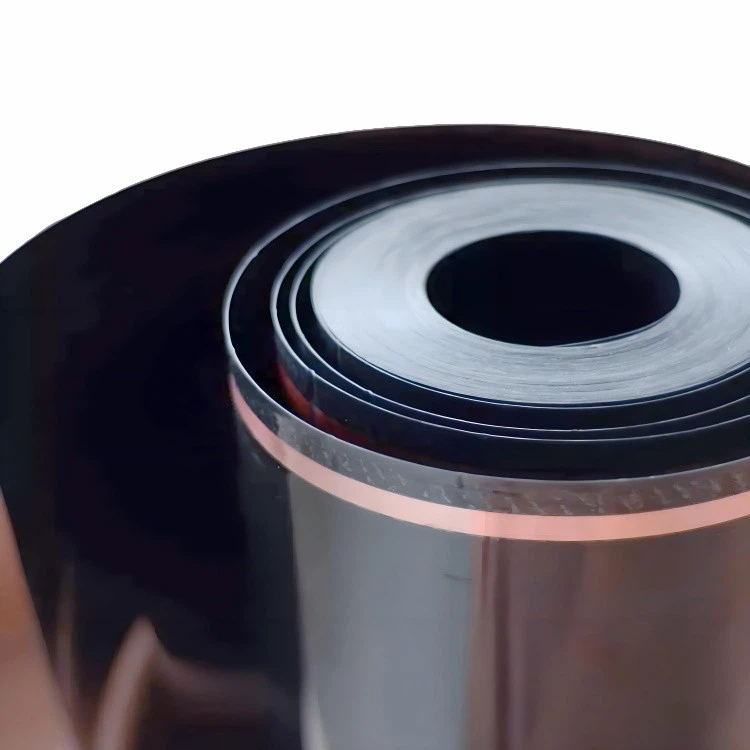
In the construction industry, transparent flame - retardant graphite film can be used as a fire - resistant and transparent insulation material. It can provide both thermal insulation and fire protection for buildings without obstructing the view. Additionally, it can be used in the automotive industry for transparent components that require flame retardancy and thermal management.
Conclusion
As a supplier of Flame - Retardant Graphite Film, we are committed to improving the transparency of our products to meet the diverse needs of our customers. By controlling the thickness, selecting appropriate additives, surface modification, and nanostructuring, we can enhance the transparency of the film while maintaining its excellent flame - retardant and other functional properties.
If you are interested in our Flame - Retardant Graphite Film or have any questions about improving its transparency, please feel free to contact us for further discussion and potential procurement. We look forward to working with you to find the best solutions for your specific applications.
References
[1] Smith, J. K. (2018). Influence of thickness on the optical properties of graphite films. Journal of Materials Science, 43(10), 3456 - 3462.


