


As a supplier of Pure Expanded Flexible Graphite Sheet, I am often asked about the production process of this remarkable material. In this blog post, I will delve into the detailed steps involved in manufacturing Pure Expanded Flexible Graphite Sheet, shedding light on the science and technology behind its creation.
1. Raw Material Selection
The journey of producing Pure Expanded Flexible Graphite Sheet begins with the careful selection of high - quality raw materials. The primary raw material is natural flake graphite, which is sourced from mines around the world. High - quality natural flake graphite has a high carbon content, typically above 90%. The size and purity of the graphite flakes are crucial factors. Larger flakes generally result in better expansion properties, while high purity ensures fewer impurities in the final product. For our production, we source graphite from regions known for their high - grade graphite deposits, ensuring that our raw material meets the strictest quality standards.
2. Intercalation Process
The intercalation process is the first key step in transforming natural flake graphite into expanded graphite. Intercalation involves introducing foreign atoms, ions, or molecules between the layers of graphite. This is typically achieved by treating the natural flake graphite with a mixture of strong acids, such as sulfuric acid and nitric acid, along with an oxidizing agent. The acid mixture penetrates the graphite layers, creating a graphite intercalation compound (GIC).
The reaction conditions, including temperature, time, and the concentration of the acid mixture, are carefully controlled. A typical intercalation process might take place at a relatively low temperature, around 30 - 50°C, and last for several hours. During this process, the acid molecules insert themselves between the graphite layers, weakening the van der Waals forces that hold the layers together.
3. Washing and Drying
After the intercalation process, the graphite intercalation compound needs to be washed to remove the excess acid. This is done by repeatedly rinsing the GIC with water until the pH of the wash water reaches a neutral level. Washing is a critical step as any remaining acid can cause corrosion and degradation of the final product.
Once the washing is complete, the GIC is dried. The drying process is carried out at a controlled temperature, usually below 100°C, to prevent premature expansion. The goal is to remove the water from the GIC while maintaining the integrity of the intercalated structure.
4. Expansion
The expansion step is what gives the graphite its unique flexible and expanded properties. The dried graphite intercalation compound is rapidly heated to a high temperature, typically between 800 - 1000°C, in a furnace. This sudden heating causes the intercalated molecules to decompose and vaporize, generating a large amount of gas. The gas pressure forces the graphite layers to separate, resulting in a significant expansion of the graphite.
The expansion ratio can be quite high, with the volume of the expanded graphite increasing by up to 300 - 800 times compared to the original graphite flakes. The result is a light, fluffy material known as expanded graphite worm.
5. Rolling and Compaction
The expanded graphite worms are then fed into a rolling mill to produce a continuous sheet. During the rolling process, the worms are compressed and aligned to form a dense, uniform sheet. The rolling mill applies a specific pressure to control the thickness and density of the sheet. Multiple passes through the rolling mill may be required to achieve the desired thickness and quality.
The compaction process is carefully monitored to ensure that the sheet has consistent properties throughout. The thickness of the Pure Expanded Flexible Graphite Sheet can range from a few tenths of a millimeter to several millimeters, depending on the specific application requirements.
6. Quality Control
Quality control is an integral part of the production process. At various stages, samples are taken to test the physical and chemical properties of the Pure Expanded Flexible Graphite Sheet. These tests include measuring the carbon content, density, thickness, flexibility, and thermal conductivity.

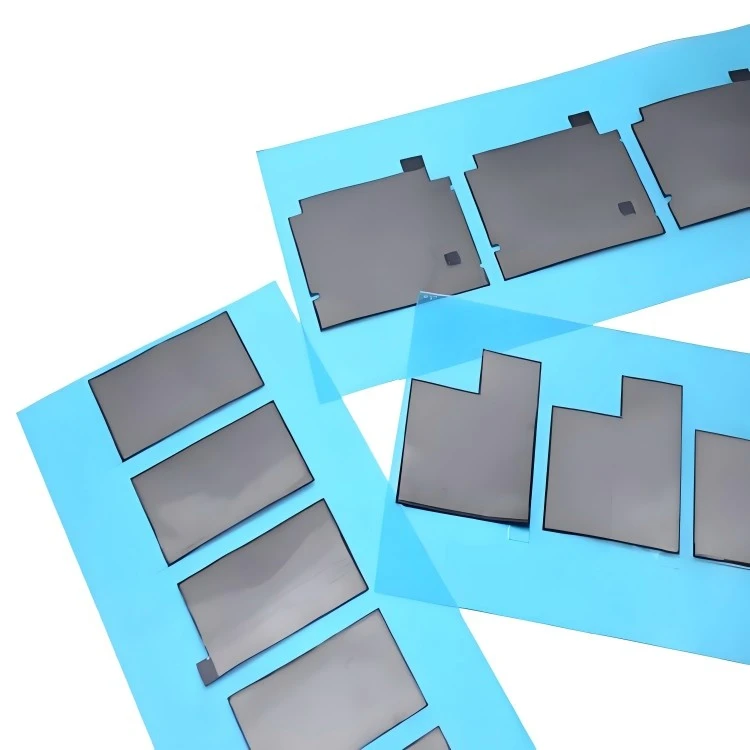
In addition, the sheet is inspected for any surface defects, such as cracks, holes, or unevenness. Only sheets that meet our strict quality standards are approved for sale. Quality control ensures that our customers receive a product that is reliable and performs well in their applications.
Applications of Pure Expanded Flexible Graphite Sheet
Pure Expanded Flexible Graphite Sheet has a wide range of applications due to its excellent properties. It is commonly used in the sealing industry, as it can provide a tight and reliable seal in high - temperature and high - pressure environments. It is also used in the electronics industry for heat dissipation, as it has high thermal conductivity.
If you are interested in other types of graphite sheets related to our Pure Expanded Flexible Graphite Sheet, you can explore our product range. For example, we also offer Molded Graphite Sheet, Oxidation - resistant Graphite Sheet, Graphite Sheet Material, and Thin Graphite Sheet. You can click on the links to learn more about these products.
Contact Us for Purchase
If you are in need of high - quality Pure Expanded Flexible Graphite Sheet or any of our other graphite products, we invite you to contact us for procurement discussions. We are committed to providing you with the best products and services tailored to your specific needs. You can visit our website Pure Expanded Flexible Graphite Sheet to learn more about our products and start the process of purchasing.
References
- "Graphite and its Composites: Fundamentals, Technology, and Applications" by R. V. Ramana and E. S. N. Raju.
- "Carbon Materials: From Fullerenes to Nanotubes" edited by M. Endo, et al.


