


In modern industrial applications, the performance of materials under high - pressure environments is a crucial factor. As a supplier of Oxidation - resistant Graphite Sheet, I am constantly exploring and understanding the remarkable performance of this material in high - pressure scenarios.
Unique Structure and High - Pressure Adaptability
Graphite itself has a unique hexagonal lattice structure. Each carbon atom is covalently bonded to three other carbon atoms in the same plane, forming a honeycomb - like flat structure. These planes are connected by relatively weak van der Waals forces. In the case of oxidation - resistant graphite sheet, this basic structure provides a certain degree of flexibility and resilience. When subjected to high pressure, the weak van der Waals forces between the graphite layers can allow for some degree of relative sliding between the layers. This sliding mechanism enables the graphite sheet to redistribute the applied pressure, reducing the stress concentration at a single point.
Compared to some traditional materials, such as metals, which may deform plastically or even fracture under high pressure, the oxidation - resistant graphite sheet can maintain its structural integrity to a large extent. For example, in high - pressure hydraulic systems, molded graphite sheet ["/graphite - paper/graphite - sheet/molded - graphite - sheet.html"] is often used as a sealing material. The natural lubricity of graphite, combined with its ability to adapt to pressure, ensures that the seal remains effective even under extreme pressure conditions.
Chemical Stability in High - Pressure Oxidizing Environments
One of the most significant advantages of oxidation - resistant graphite sheets is their enhanced resistance to oxidation. In high - pressure environments, especially those containing oxygen or oxidizing agents, many materials are prone to rapid oxidation and degradation. However, the oxidation - resistant graphite sheet is designed to withstand such conditions.

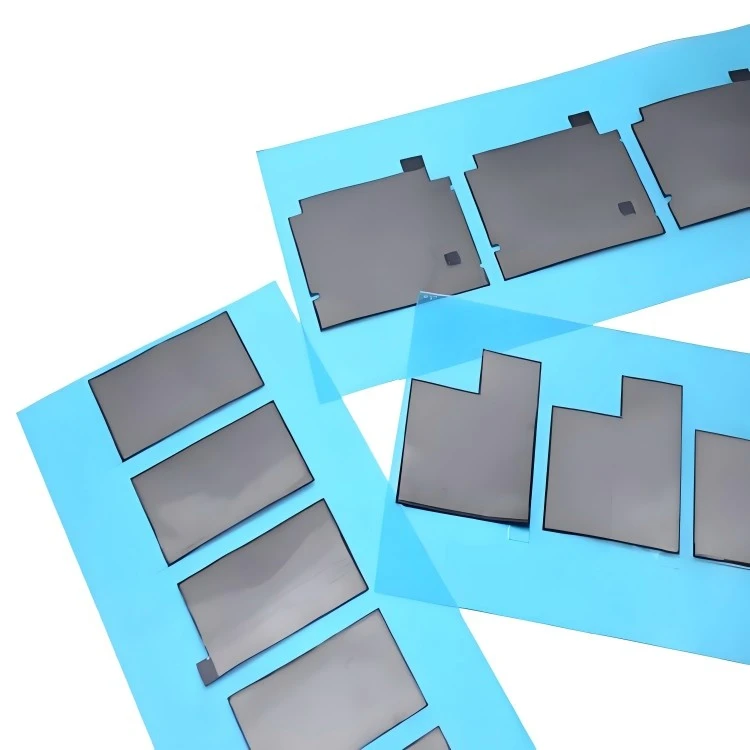
The oxidation - resistant treatment of graphite sheets involves the application of special coatings or the addition of certain additives. These treatments form a protective layer on the surface of the graphite, which can prevent the direct contact between the graphite and oxygen or other oxidizing substances. In high - pressure oxygen - rich environments, this protective layer remains stable, effectively inhibiting the oxidation reaction. For instance, in some high - pressure chemical reactors where the oxidation of materials can lead to equipment failure and safety hazards, the [/graphite - paper/graphite - sheet/oxidation - resistant - graphite - sheet.html] plays a vital role in maintaining the long - term stability of the system.
Thermal Conductivity in High - Pressure Situations
Thermal management is another critical aspect in high - pressure environments. Many high - pressure processes generate a large amount of heat, and if not properly dissipated, this heat can cause temperature imbalances, material degradation, and even system malfunctions. Oxidation - resistant graphite sheets have excellent thermal conductivity properties.
The delocalized electrons in the graphite structure are responsible for its high thermal conductivity. In high - pressure environments, the compact arrangement of graphite layers under pressure can further enhance the heat transfer efficiency. For example, in high - pressure electronic devices, heat - dissipating graphite sheet ["/graphite - paper/graphite - sheet/heat - dissipating - graphite - sheet.html"] can quickly transfer the heat generated by components to the surrounding environment, maintaining a proper operating temperature for the device. The combination of high thermal conductivity and oxidation resistance makes oxidation - resistant graphite sheets an ideal choice for high - pressure thermal management applications.
Application in High - Pressure Sealing
Sealing is a key function in high - pressure systems. Oxidation - resistant graphite sheets are widely used in high - pressure sealing applications. Their unique structure allows them to conform to irregular surfaces, providing a tight seal. The oxidation resistance ensures that the seal does not deteriorate over time due to oxidation, maintaining a reliable sealing performance.
In high - pressure pipelines, for example, pure expanded flexible graphite sheet ["/graphite - paper/graphite - sheet/pure - expanded - flexible graphite - sheet.html"] can be used as a gasket material. The flexibility of the sheet allows it to be easily installed and adapt to the flanges of the pipeline. Under high pressure, the graphite sheet can fill any small gaps between the flanges, preventing leakage. Moreover, its oxidation resistance ensures that the gasket remains effective in long - term use, even in harsh environments with a certain level of oxygen or moisture.
Comparison with Other Materials
When compared with other materials commonly used in high - pressure environments, such as ceramics and polymers, oxidation - resistant graphite sheets offer several advantages. Ceramics are brittle and may crack under high pressure, especially if there are any pre - existing defects. Polymers, on the other hand, often have limited oxidation resistance and may soften or deform at high temperatures, which are often associated with high - pressure processes.
In contrast, oxidation - resistant graphite sheets combine high - pressure adaptability, oxidation resistance, and good thermal conductivity. This makes them a more comprehensive solution for high - pressure applications. For example, in some high - pressure and high - temperature industrial furnaces, thermally conductive graphite sheet ["/graphite - paper/graphite - sheet/thermally - conductive - graphite - sheet.html"] can not only withstand the high pressure but also effectively dissipate the heat generated, which is difficult to achieve with other materials.
Future Outlook
As the demand for high - pressure applications continues to grow in various industries, such as aerospace, energy, and chemical engineering, the importance of oxidation - resistant graphite sheets will only increase. Future research and development efforts will focus on further improving the performance of these sheets, such as enhancing their oxidation resistance at even higher pressures and temperatures, and optimizing their mechanical and thermal properties.
Additionally, with the development of new manufacturing techniques, we expect to see more precise and customized oxidation - resistant graphite sheets. These sheets can be tailored to meet the specific requirements of different high - pressure applications, providing more efficient and reliable solutions.
Contact for Purchase and Discussion
If you are interested in our Oxidation - resistant Graphite Sheet and would like to learn more about its performance in high - pressure environments or discuss potential applications in your projects, please feel free to reach out. We are committed to providing high - quality products and professional technical support.
References
- [Author, Title of the relevant research paper, Journal Name, Publication Year]
- [Author, Title of the book on graphite materials, Publisher, Publication Year]


