


As a supplier of graphite sheets, I've witnessed firsthand the remarkable versatility and utility of these materials across various industries. One of the most critical factors that can significantly influence the performance of graphite sheets is temperature. In this blog post, I'll delve into how temperature affects the mechanical properties of graphite sheets, exploring the underlying mechanisms and practical implications for different applications.
Understanding Graphite Sheets
Before we discuss the impact of temperature on graphite sheets, let's briefly understand what they are. Graphite sheets are made from highly oriented pyrolytic graphite (HOPG) or natural graphite and are known for their excellent thermal conductivity, electrical conductivity, and chemical stability. They come in various types, including Thermally Conductive Graphite Sheet, Oxidation-resistant Graphite Sheet, and Molded Graphite Sheet, each tailored to specific applications.
Thermal Expansion
One of the primary ways temperature affects the mechanical properties of graphite sheets is through thermal expansion. Like most materials, graphite sheets expand when heated and contract when cooled. However, the coefficient of thermal expansion (CTE) of graphite is relatively low compared to many metals and polymers. This low CTE is beneficial in applications where dimensional stability is crucial, such as in electronic devices and aerospace components.
At low temperatures, the thermal expansion of graphite sheets is minimal, and their mechanical properties remain relatively stable. As the temperature increases, the expansion becomes more significant, which can lead to internal stresses within the sheet. If these stresses exceed the strength of the graphite, it can cause cracking or delamination, particularly in applications where the graphite sheet is constrained or bonded to other materials.
Strength and Hardness
Temperature also has a significant impact on the strength and hardness of graphite sheets. At room temperature, graphite sheets are relatively soft and have a low modulus of elasticity. However, as the temperature increases, the strength and hardness of the graphite can increase due to the activation of various strengthening mechanisms.
One such mechanism is the increased mobility of dislocations within the graphite lattice. At higher temperatures, the atoms in the graphite lattice have more energy, allowing dislocations to move more freely. This increased mobility can lead to work hardening, where the graphite becomes stronger and more resistant to deformation.
However, at very high temperatures, the strength and hardness of graphite sheets can decrease due to thermal degradation. As the temperature approaches the decomposition temperature of graphite, the carbon-carbon bonds in the lattice begin to break, leading to a loss of structural integrity. This can result in a significant reduction in the mechanical properties of the graphite sheet, making it more prone to failure.
Fracture Toughness
Fracture toughness is a measure of a material's ability to resist crack propagation. In graphite sheets, fracture toughness is influenced by temperature in several ways. At low temperatures, graphite sheets are relatively brittle, and cracks can propagate easily through the material. As the temperature increases, the fracture toughness of graphite can increase due to the increased mobility of dislocations and the ability of the material to absorb energy through plastic deformation.
However, at very high temperatures, the fracture toughness of graphite sheets can decrease due to thermal degradation. As the carbon-carbon bonds in the lattice break, the material becomes more brittle, and cracks can propagate more easily. This can make the graphite sheet more prone to catastrophic failure, particularly in applications where it is subjected to high stresses or impact loads.
Electrical and Thermal Conductivity
In addition to its mechanical properties, temperature also affects the electrical and thermal conductivity of graphite sheets. Graphite is an excellent conductor of both electricity and heat, and its conductivity is highly dependent on temperature.

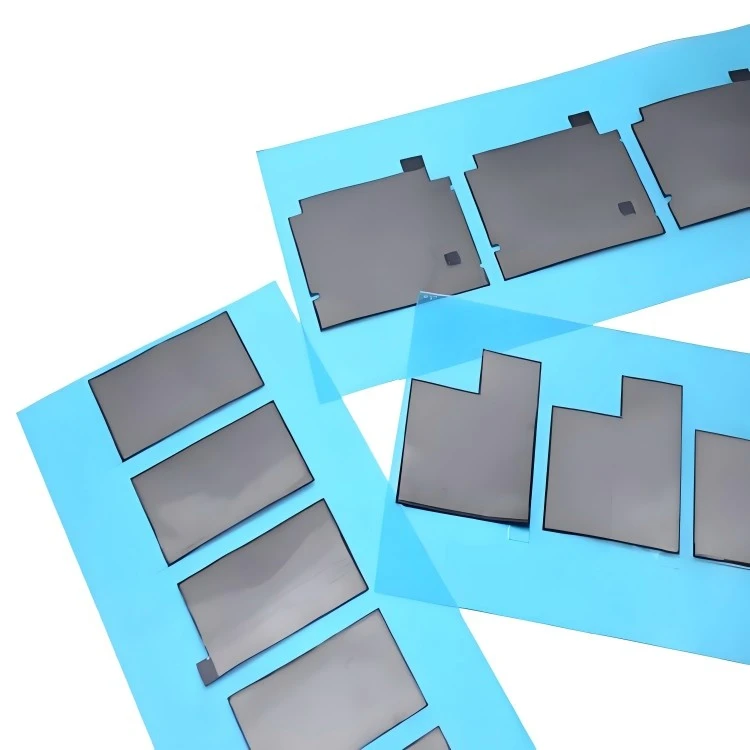
At low temperatures, the electrical and thermal conductivity of graphite sheets is relatively high due to the ordered structure of the graphite lattice. As the temperature increases, the conductivity can decrease due to the increased scattering of electrons and phonons within the lattice. This decrease in conductivity can have significant implications for applications where high electrical or thermal conductivity is required, such as in electronic devices and heat sinks.
Practical Implications
The impact of temperature on the mechanical properties of graphite sheets has several practical implications for different applications. In electronic devices, for example, the low CTE of graphite sheets makes them ideal for use as heat spreaders and thermal interface materials. However, the decrease in electrical and thermal conductivity at high temperatures must be considered when designing these components to ensure optimal performance.
In aerospace applications, the high strength and low CTE of graphite sheets make them suitable for use in structural components and thermal protection systems. However, the potential for thermal degradation at very high temperatures must be carefully evaluated to ensure the safety and reliability of these components.
Conclusion
In conclusion, temperature has a significant impact on the mechanical properties of graphite sheets. From thermal expansion and strength to fracture toughness and conductivity, the behavior of graphite sheets at different temperatures must be carefully considered in the design and application of these materials. As a supplier of graphite sheets, I understand the importance of providing high-quality products that meet the specific requirements of our customers. Whether you need a Thermally Conductive Graphite Sheet, an Oxidation-resistant Graphite Sheet, or a Molded Graphite Sheet, we have the expertise and experience to provide you with the right solution for your application.
If you're interested in learning more about our graphite sheets or have specific requirements for your project, please don't hesitate to contact us. Our team of experts is ready to assist you in selecting the best graphite sheet for your needs and to provide you with the support and guidance you need to ensure the success of your project.
References
- Callister, W. D., & Rethwisch, D. G. (2011). Materials Science and Engineering: An Introduction. Wiley.
- Shackelford, J. F. (2009). Introduction to Materials Science for Engineers. Pearson.
- Ashby, M. F., & Jones, D. R. H. (2005). Engineering Materials 1: An Introduction to Properties, Applications, and Design. Butterworth-Heinemann.


