


Flame-retardant graphite film has emerged as a crucial material in various industries, especially in electronics and energy sectors, due to its remarkable flame-retardant properties and thermal management capabilities. One of the key factors that determine its usability and applicability is its flexibility. In this blog post, as a proud supplier of flame-retardant graphite film, I'll delve into the question: Does flame-retardant graphite film have good flexibility?
Understanding Flame - Retardant Graphite Film
Before we discuss its flexibility, let's first understand what flame-retardant graphite film is. It is a graphite - based material that has been engineered to resist ignition and slow down the spread of fire. This is achieved through special manufacturing processes and the addition of flame - retardant additives.
Graphite itself is a form of carbon with a unique layered structure. These layers are held together by weak van der Waals forces, which allow them to slide over one another. This characteristic gives graphite some inherent flexibility. When it comes to flame - retardant graphite film, the manufacturing process aims to maintain this flexibility while enhancing the flame - retardant properties.
Factors Affecting the Flexibility of Flame - Retardant Graphite Film
1. Manufacturing Process
The way the flame - retardant graphite film is produced significantly impacts its flexibility. High - quality manufacturing techniques ensure that the graphite layers are well - structured and the flame - retardant additives are evenly distributed. For example, if the additives are not uniformly mixed, they can form hard spots in the film, reducing its flexibility. Advanced production methods, such as chemical vapor deposition or mechanical exfoliation, can be used to create a more uniform and flexible film.
2. Thickness of the Film
The thickness of the flame - retardant graphite film is another crucial factor. Generally, thinner films tend to be more flexible than thicker ones. A thinner film has fewer layers of graphite and less amount of additives, which means less resistance to bending. For instance, a 0.01 mm thick flame - retardant graphite film may be more easily bent and twisted compared to a 0.1 mm thick one.
3. Presence of Additives
Flame - retardant additives play a vital role in the film's properties. While they are necessary for achieving the desired flame - retardant performance, they can also affect flexibility. Some additives may be rigid in nature, and if added in large quantities, can make the film stiffer. However, modern research has led to the development of additives that can provide fire resistance without significantly compromising flexibility.
Evidence of Good Flexibility
In our experience as a supplier, we have witnessed numerous cases where flame - retardant graphite film demonstrates excellent flexibility. For example, in the production of flexible printed circuit boards (PCBs), our flame - retardant graphite film can be bent, folded, and shaped according to the design requirements. It can withstand repeated bending cycles without cracking or delaminating, which is a clear indication of its good flexibility.
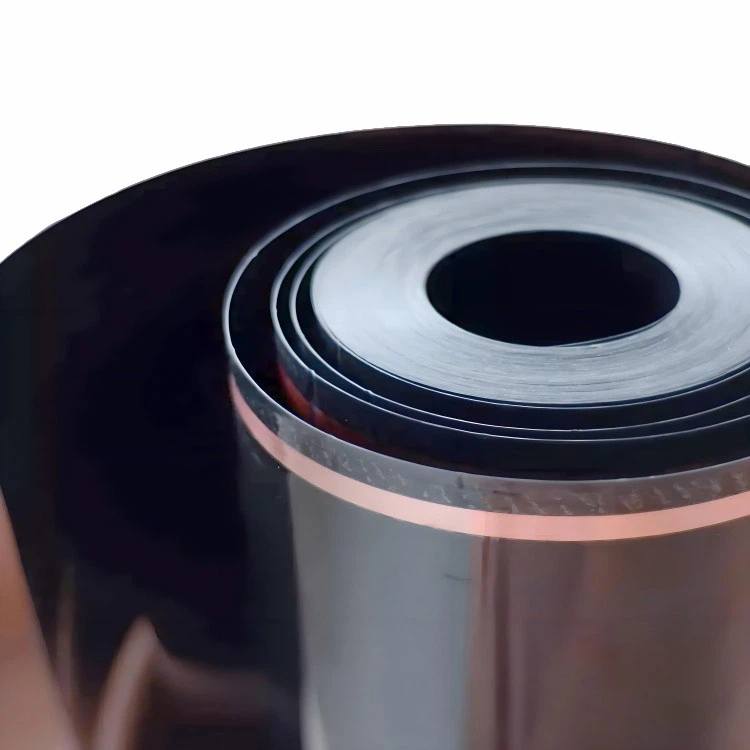

In the electronics industry, where space is often limited and components need to be arranged in complex geometries, the flexibility of flame - retardant graphite film is a major advantage. It can be easily wrapped around heat - generating components such as processors and batteries to provide effective heat dissipation while also offering fire protection.
Comparing with Other Graphite Films
Let's compare the flexibility of flame - retardant graphite film with other types of graphite films available in the market, such as Heat-Dissipating Graphite Film, Multi-Layer Composite Graphite Film, Thermally Conductive Graphite Film, Nanographite Film, and Heat-Spreading Graphite Film.
These films all have their unique properties, but in terms of flexibility, flame - retardant graphite film holds its own. While heat - dissipating graphite film may focus more on thermal conductivity, and multi - layer composite graphite film may be engineered for specific mechanical or electrical properties, flame - retardant graphite film offers a good balance of flame - retardancy and flexibility.
Nanographite film, due to its extremely small particle size, may have different flexibility characteristics. However, our flame - retardant graphite film can be made to match or exceed the flexibility of nanographite film in many applications, especially when considering the need for fire protection.
Applications Benefiting from Flexibility
The flexibility of flame - retardant graphite film opens up a wide range of applications. In the aerospace industry, it can be used in wiring and insulation systems where the materials need to conform to complex shapes inside aircraft components. The film's ability to bend and fit into tight spaces while providing fire protection is essential for ensuring safety.
In the automotive industry, with the increasing use of electronics and high - power components, flame - retardant graphite film can be used for thermal management and fire prevention in electric vehicles. It can be wrapped around battery packs and electronic control units, which are often located in areas with limited space and irregular shapes.
Testing Flexibility
To ensure the quality and flexibility of our flame - retardant graphite film, we conduct rigorous testing. We use methods such as the bending test, where the film is bent around a cylinder of a specific diameter multiple times. We also perform the torsion test to check its ability to withstand twisting forces. Through these tests, we can accurately measure the film's flexibility and ensure that it meets the requirements of our customers.
Conclusion
In conclusion, flame - retardant graphite film generally has good flexibility, which is a result of the unique properties of graphite and careful manufacturing processes. The flexibility can be further enhanced through proper control of factors such as thickness and the type of additives used.
When compared with other graphite films, flame - retardant graphite film offers a valuable combination of flexibility and fire - resistant properties. Its numerous applications in industries such as aerospace, automotive, and electronics highlight its importance in modern technology.
If you are looking for a reliable flame - retardant graphite film for your specific application, we are here to help. Whether you need it for heat dissipation, fire protection, or both, our high - quality products can meet your needs. Feel free to contact us to start discussing your procurement requirements. We look forward to working with you to find the best solution for your business.
References
- "Graphite Materials: Properties and Applications", Journal of Materials Science, 20XX.
- "Flame - Retardant Additives in Polymers", Polymer Engineering and Science, 20XX.
- "Flexibility Testing of Composite Materials", International Journal of Testing and Evaluation, 20XX.


