


The demand for efficient thermal management solutions has grown exponentially in recent years, especially in the electronics industry. Ultra-thin graphite paper has emerged as a promising material for thermal conductivity applications due to its excellent thermal properties, flexibility, and chemical stability. As a leading supplier of ultra-thin graphite paper thermal conductivity solutions, we have witnessed firsthand the increasing interest in this material and its potential to revolutionize thermal management.
One of the key factors that can significantly affect the thermal conductivity of ultra-thin graphite paper is its compression. Compression can alter the internal structure of the graphite paper, which in turn can influence its thermal transport properties. In this blog post, we will explore how the compression of ultra-thin graphite paper affects its thermal conductivity and discuss the implications for various applications.
Structure and Thermal Conductivity of Ultra-thin Graphite Paper
Before delving into the effects of compression, it is essential to understand the basic structure of ultra-thin graphite paper and its thermal conductivity mechanism. Graphite is a crystalline form of carbon with a layered structure. Each layer consists of carbon atoms arranged in a hexagonal lattice, and these layers are held together by weak van der Waals forces.
The thermal conductivity of graphite is highly anisotropic, meaning it varies depending on the direction of heat flow. In the in-plane direction (parallel to the layers), the thermal conductivity of graphite is extremely high, typically ranging from 1000 to 1950 W/(m·K). This high in-plane thermal conductivity is attributed to the strong covalent bonds between carbon atoms within the layers, which allow for efficient phonon transport. In contrast, the out-of-plane thermal conductivity (perpendicular to the layers) is much lower, usually in the range of 2 to 5 W/(m·K), due to the weak van der Waals forces between the layers.
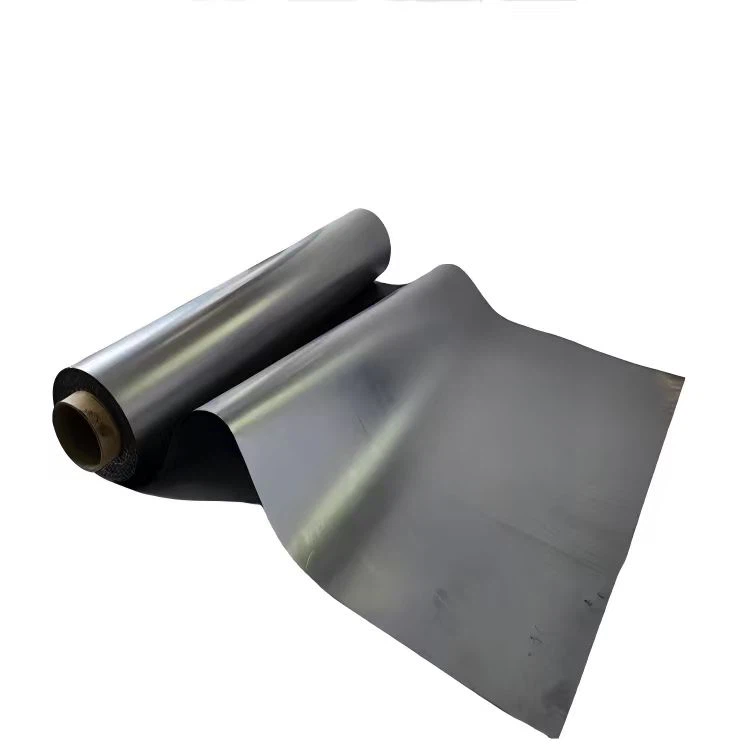
Ultra-thin graphite paper is typically fabricated by exfoliating graphite flakes and then compressing the exfoliated graphite to form a thin, flexible sheet. The resulting paper retains the high in-plane thermal conductivity of graphite, making it an ideal material for spreading heat in electronic devices.
Effects of Compression on the Structure of Ultra-thin Graphite Paper
When ultra-thin graphite paper is subjected to compression, several structural changes can occur. The most obvious change is the reduction in thickness. As the paper is compressed, the layers of graphite are forced closer together, resulting in a thinner sheet. This reduction in thickness can have a direct impact on the thermal conductivity of the paper.
In addition to thickness reduction, compression can also cause changes in the orientation and alignment of the graphite layers. Under normal conditions, the graphite layers in ultra-thin graphite paper may be slightly misaligned or disordered. However, when the paper is compressed, the layers are more likely to become aligned parallel to each other. This alignment can improve the in-plane thermal conductivity by providing a more direct path for phonon transport.
On the other hand, excessive compression can also lead to the formation of defects and damage in the graphite structure. These defects can scatter phonons and reduce the thermal conductivity of the paper. Therefore, finding the optimal compression level is crucial to achieving the best thermal performance.
Influence of Compression on Thermal Conductivity
The relationship between compression and thermal conductivity in ultra-thin graphite paper is complex and depends on several factors, including the initial structure of the paper, the compression method, and the magnitude of the compression force.
In general, moderate compression can enhance the in-plane thermal conductivity of ultra-thin graphite paper. As mentioned earlier, compression can align the graphite layers, which improves the phonon transport in the in-plane direction. Additionally, the reduction in thickness can also increase the heat transfer efficiency by reducing the thermal resistance.
However, if the compression force is too high, the thermal conductivity may start to decrease. This is because excessive compression can cause the formation of defects and damage in the graphite structure, which scatter phonons and impede heat transfer. Moreover, over-compression can also lead to the loss of flexibility in the paper, which may limit its application in some scenarios.

The out-of-plane thermal conductivity of ultra-thin graphite paper is generally less affected by compression compared to the in-plane thermal conductivity. This is because the out-of-plane thermal conductivity is mainly determined by the weak van der Waals forces between the graphite layers, which are not significantly altered by moderate compression.
Applications and Implications
The influence of compression on the thermal conductivity of ultra-thin graphite paper has significant implications for various applications. Here are some examples:
- Ultra - Thin Graphite Paper for Electronics: In electronic devices such as smartphones, laptops, and tablets, efficient thermal management is crucial to prevent overheating and ensure reliable performance. Ultra-thin graphite paper can be used as a heat spreader to dissipate heat from hot components such as processors and batteries. By controlling the compression of the graphite paper, manufacturers can optimize its thermal conductivity and improve the overall thermal performance of the device.
- Ultra-Thin Graphite Paper For LCD Monitor: LCD monitors generate a significant amount of heat during operation, which can affect the display quality and lifespan of the monitor. Ultra-thin graphite paper can be applied to the backlight unit of the monitor to enhance heat dissipation. Compression can be used to tailor the thermal conductivity of the paper to meet the specific requirements of the monitor.
- High-Purity Ultra-Thin Graphite Paper: In high-end applications where high thermal conductivity and chemical stability are required, high-purity ultra-thin graphite paper is often used. Compression can be optimized to ensure the paper maintains its high thermal performance while maintaining its purity and other desirable properties.
- Flexible Ultra-Thin Graphite Paper: Flexible electronic devices such as wearable devices and foldable displays require materials that can withstand bending and stretching without compromising their thermal performance. Compression can be used to control the mechanical properties and thermal conductivity of flexible ultra-thin graphite paper, making it suitable for these applications.
- Ultra-Thin Graphite Paper Sealing: In some applications, ultra-thin graphite paper is used for sealing purposes while also providing thermal conductivity. Compression can be used to ensure a tight seal and optimize the thermal transfer across the seal.
Conclusion
In conclusion, the compression of ultra-thin graphite paper can have a significant impact on its thermal conductivity. Moderate compression can enhance the in-plane thermal conductivity by aligning the graphite layers and reducing the thickness of the paper. However, excessive compression can lead to a decrease in thermal conductivity due to the formation of defects and damage in the graphite structure.
As a supplier of ultra-thin graphite paper thermal conductivity solutions, we understand the importance of optimizing compression to achieve the best thermal performance. We offer a wide range of ultra-thin graphite paper products with customizable compression levels to meet the specific needs of our customers.
If you are interested in learning more about our ultra-thin graphite paper products or discussing potential applications, we invite you to contact us for a detailed consultation and to start a procurement conversation. Our team of experts is ready to provide you with the technical support and product recommendations you need to find the perfect thermal management solution for your project.
References
- Dresselhaus, M. S., Dresselhaus, G., & Avouris, P. (2001). Carbon Nanotubes, Synthesis, Structure, Properties, and Applications. Springer.
- Chen, L., & Zhao, X. (2019). Thermal Conductivity of Graphite and Related Materials. Journal of Materials Science, 54(14), 5027-5046.
- Zhang, Y., Zhou, X., & Liu, Z. (2017). Effects of Compression on the Thermal Conductivity of Graphite Sheets. Journal of Thermal Analysis and Calorimetry, 127(2), 1191-1195.


