


Hey there! As a graphite tape supplier, I often get asked all sorts of questions about our products. One question that's been popping up a lot lately is, "Can graphite tape be used for noise reduction?" Well, let's dive right into it and find out.
First off, let's talk a bit about what graphite tape is. Graphite tape is made from high - quality graphite material. It comes in different types, like Graphite Tape For Boiler Sealing, Graphite Adhesive Tape, and High - Purity Graphite Tape. Each type has its own unique properties and uses, but they all share the basic characteristics of graphite.
Graphite is a pretty amazing material. It's soft, has good thermal conductivity, and is chemically stable. These properties make it useful in a wide range of applications, from industrial to consumer products. But when it comes to noise reduction, we need to look at how it interacts with sound waves.
Sound waves are essentially vibrations that travel through a medium, like air or a solid material. To reduce noise, a material needs to be able to absorb or dampen these vibrations. When it comes to graphite tape, its structure plays a crucial role.
Graphite has a layered structure. The layers are held together by weak van der Waals forces. When a sound wave hits the graphite tape, these layers can move slightly relative to each other. This movement can absorb some of the energy from the sound wave, converting it into heat energy. In a way, the graphite tape acts like a shock absorber for sound.
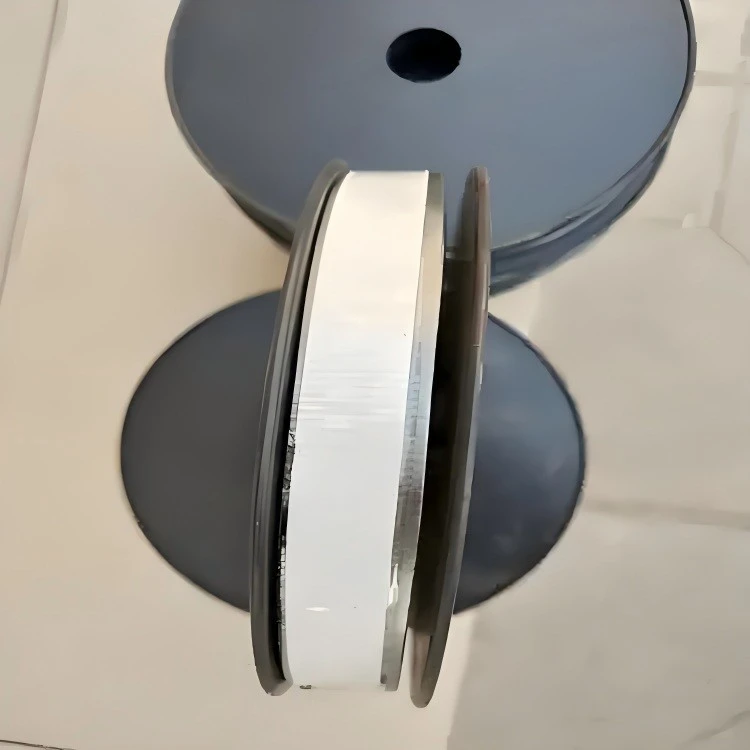

Let's take a look at some real - world scenarios where graphite tape could potentially be used for noise reduction.
Industrial Applications
In industrial settings, there are often a lot of noisy machines. For example, in a manufacturing plant, conveyor belts, motors, and pumps can generate a significant amount of noise. Graphite tape could be used to line the enclosures of these machines. By applying the tape to the inner walls of the enclosures, it can absorb some of the sound waves generated by the machines. This not only reduces the overall noise level in the plant but also helps protect workers from long - term exposure to high - decibel noise.
Another industrial use could be in the automotive industry. Engines are a major source of noise in vehicles. Graphite tape could be used in the engine compartment to dampen the noise produced by the engine. It could be applied to the engine covers or the inner walls of the compartment. This would not only make the ride more comfortable for the passengers but also help meet noise regulations.
Consumer Applications
In our daily lives, we also encounter a lot of noise. Think about the noise from our electronic devices, like laptops and printers. These devices have fans and motors that can be quite noisy. Graphite tape could be used inside these devices to reduce the noise. For example, it could be applied to the chassis of a laptop to absorb the vibrations from the fan.
In home appliances, such as refrigerators and washing machines, graphite tape could also be used. Refrigerators have compressors that make noise, and washing machines have motors and pumps. By using graphite tape in these appliances, manufacturers can make them quieter, which is a big plus for consumers.
Testing and Results
Of course, just saying that graphite tape can reduce noise isn't enough. We need to look at some testing results. There have been some studies on the acoustic properties of graphite - based materials. While there isn't a huge amount of research specifically on graphite tape for noise reduction, the general findings on graphite materials are promising.
In some laboratory tests, samples of graphite tape were placed in an anechoic chamber, which is a room designed to absorb all sound reflections. Sound waves were then directed at the samples, and the amount of sound absorption was measured. The results showed that graphite tape was able to absorb a certain percentage of the sound energy, especially in the mid - frequency range.
However, it's important to note that the effectiveness of graphite tape for noise reduction can vary depending on several factors. The thickness of the tape, the type of graphite used, and the frequency of the sound waves all play a role. Thicker tapes generally tend to absorb more sound, but they may also be more expensive and less flexible.
Limitations
Graphite tape isn't a magic solution for all noise problems. It has its limitations. For one, it may not be as effective at reducing low - frequency noise. Low - frequency sound waves have longer wavelengths and more energy, and it's harder for the graphite tape to absorb them.
Also, in some high - humidity environments, graphite tape may not perform as well. Moisture can affect the structure of the graphite and reduce its ability to absorb sound.
Conclusion
So, can graphite tape be used for noise reduction? The answer is yes, to some extent. Its unique structure allows it to absorb sound energy, especially in the mid - frequency range. It has potential applications in both industrial and consumer settings. However, it's not a one - size - fits - all solution, and there are limitations to its effectiveness.
If you're interested in using graphite tape for noise reduction or any other application, I'd love to have a chat with you. Whether you need Graphite Tape For Boiler Sealing, Graphite Adhesive Tape, or High - Purity Graphite Tape, we can work together to find the right product for your needs. Don't hesitate to reach out and start a conversation about your requirements.
References
- Studies on acoustic properties of graphite - based materials from various research institutions.
- Laboratory test reports on the sound absorption of graphite tape samples.


