


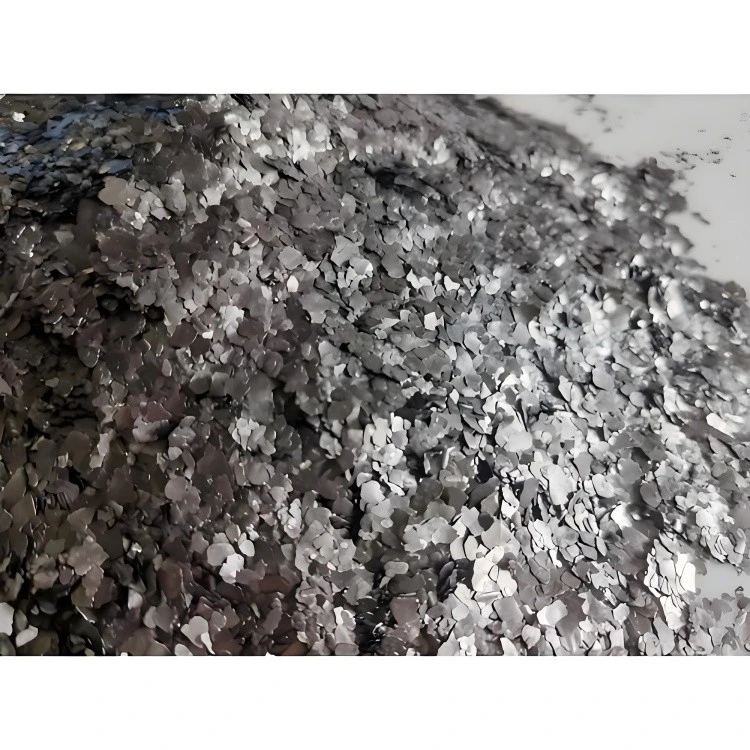
Flake graphite is a highly valuable natural mineral with a wide range of applications, including in the steel, electronics, and battery industries. As a leading flake graphite supplier, we understand the importance of providing high-quality products to our customers. One of the key steps in ensuring the quality of flake graphite is the purification process. In this blog post, we will explore the various purification methods for flake graphite and how they contribute to the production of high-purity graphite products.

Why Purify Flake Graphite?
Flake graphite, as it is mined, often contains impurities such as silicates, sulfides, and other minerals. These impurities can significantly affect the performance of graphite in various applications. For example, in the battery industry, impurities can reduce the efficiency and lifespan of lithium-ion batteries. Therefore, purification is essential to remove these impurities and improve the quality of flake graphite. High-purity flake graphite High Purity Flake Graphite has better electrical conductivity, thermal conductivity, and chemical stability, making it more suitable for high-end applications.
Physical Purification Methods
Gravity Separation
Gravity separation is one of the most common physical purification methods for flake graphite. This method takes advantage of the difference in density between graphite and other minerals. Graphite has a relatively low density compared to most of its associated minerals. In a gravity separation process, the graphite ore is first crushed and ground into a fine powder. Then, the powder is fed into a gravity separator, such as a shaking table or a spiral concentrator. The separator uses the force of gravity to separate the graphite from the heavier minerals. The lighter graphite particles are carried away by the flowing water, while the heavier minerals settle at the bottom. Gravity separation is a simple and cost-effective method, but it can only remove relatively large and dense impurities.
Flotation
Flotation is another important physical purification method. It is based on the difference in surface properties between graphite and other minerals. Graphite has a hydrophobic surface, which means it does not easily wet with water. In a flotation process, the graphite ore is ground into a fine powder and mixed with water to form a slurry. Then, a collector chemical is added to the slurry. The collector selectively attaches to the graphite particles, making them more hydrophobic. Air bubbles are then introduced into the slurry. The hydrophobic graphite particles attach to the air bubbles and rise to the surface of the slurry, forming a froth. The froth is skimmed off, and the graphite is collected. Flotation can effectively separate graphite from most of its associated minerals, but it may require multiple stages to achieve a high degree of purification.
Chemical Purification Methods
Acid Leaching
Acid leaching is a widely used chemical purification method for flake graphite. In this method, the graphite concentrate obtained from physical purification is treated with acids to dissolve the remaining impurities. Commonly used acids include hydrochloric acid, sulfuric acid, and hydrofluoric acid. Hydrochloric acid can dissolve metal oxides such as iron oxide and aluminum oxide. Sulfuric acid can react with some metal carbonates and sulfates. Hydrofluoric acid is particularly effective in dissolving silicates, which are common impurities in graphite ore. After the acid leaching process, the graphite is washed with water to remove the acid and the dissolved impurities. Acid leaching can significantly increase the purity of graphite, but it requires careful handling of the acids due to their corrosive nature.
Alkali Fusion
Alkali fusion is a more aggressive chemical purification method. In this process, the graphite concentrate is mixed with an alkali, such as sodium hydroxide or potassium hydroxide, and heated to a high temperature. The alkali reacts with the impurities in the graphite, converting them into soluble salts. For example, silicates react with alkali to form soluble silicates. After the fusion process, the mixture is cooled and dissolved in water. The graphite is then separated from the solution by filtration or centrifugation. The remaining graphite is washed with water to remove the soluble salts. Alkali fusion can achieve a very high degree of purification, but it is an energy-intensive process and requires special equipment to handle the high temperatures and corrosive alkalis.
High-Temperature Purification Methods
Acheson Process
The Acheson process is a high-temperature purification method that can produce extremely high-purity graphite. In this process, the graphite is heated to a very high temperature, typically above 2500°C, in an electric arc furnace. At such high temperatures, most of the impurities in the graphite are vaporized and removed. The high temperature also causes the graphite to undergo a structural transformation, improving its crystallinity and purity. The Acheson process is mainly used to produce synthetic graphite, but it can also be used to purify natural flake graphite. However, this process is very energy-intensive and requires specialized equipment, making it relatively expensive.
Applications of Purified Flake Graphite
Purified flake graphite has a wide range of applications. In the electronics industry, it is used as a conductor in batteries, electrodes, and electronic devices. Flake Graphite Conducts Heat is an important property that makes it suitable for heat dissipation applications. In the steel industry, it is used as a lubricant and a carbon additive to improve the quality of steel. In the chemical industry, it is used as a catalyst support and a corrosion-resistant material. 80 Mesh Flake Graphite 80 Mesh Flake Graphite is commonly used in various applications due to its suitable particle size.
Conclusion
As a flake graphite supplier, we are committed to providing our customers with high-quality purified graphite products. The purification methods we use, including physical, chemical, and high-temperature methods, are carefully selected and optimized to ensure the highest level of purity and quality. By removing impurities, we can enhance the performance of flake graphite in various applications, meeting the diverse needs of our customers.
If you are interested in purchasing high-quality flake graphite products, we invite you to contact us for further discussion. Our team of experts is ready to provide you with detailed information and customized solutions based on your specific requirements. Whether you need graphite for battery production, electronics, or other industries, we can offer you the right product at a competitive price.
References
- Wills, B. A., & Napier-Munn, T. (2006). Mineral Processing Technology: An Introduction to the Practical Aspects of Ore Treatment and Mineral Recovery. Butterworth-Heinemann.
- Fuerstenau, D. W., & Han, K. N. (2003). Principles of Flotation. SME.
- McKelvey, V. E. (1972). Mineral Resources, Economics, and the Environment. McGraw-Hill.


