


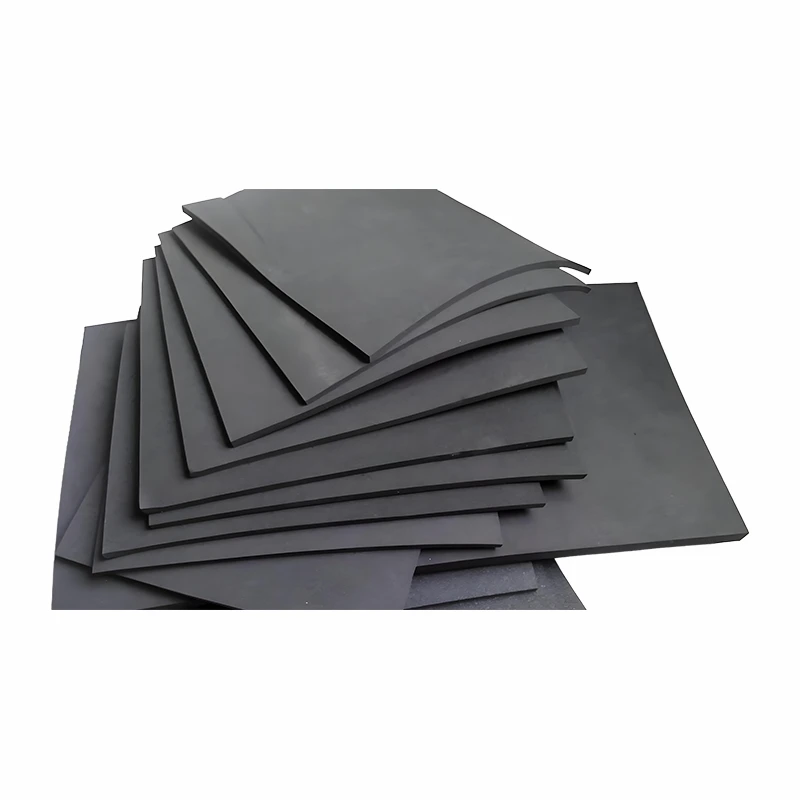
Anti-Oxidation Graphite Electrode Plate is a kind of graphite electrode plate which has been specially treated to improve its stability in high-temperature oxidation environment. It not only retains the excellent electrical conductivity, high-temperature resistance and chemical stability of graphite, but also significantly improves the oxidation resistance, making it suitable for industrial scenes of long-term high-temperature operation.
Performance characteristics
- Antioxidant performance: Within the specified high-temperature range, the antioxidant coating can significantly reduce the reaction between graphite electrode plates and oxygen or oxygen-containing substances, prolonging their service life.
- Reduced consumption: The use of oxidation-resistant graphite electrode plates can reduce the electrode consumption by 24% to 50%, depending on the coating formula, process conditions and operating environment.
- Improve efficiency: Due to the reduction of electrode consumption, the oxidation-resistant graphite electrode plate helps to improve production efficiency, while reducing the labor and risk of operators.
- Energy saving and environmental protection: By reducing the number of electrode replacements and reducing power consumption, the anti-oxidation graphite electrode plate contributes to energy saving and emission reduction, in line with the current environmental protection trend.
Technical Parameters
|
Parameter Category |
Specific Parameter (Unit) |
Typical Range |
|
Core Material |
Carbon Purity (%) |
99.90–99.97 (Industrial Grade); ≥99.99 (Precision Grade) |
|
Density (g/cm³) |
1.85–1.92 |
|
|
Ash Content (ppm) |
≤150 (Industrial Grade); ≤50 (Precision Grade) |
|
|
Particle Size (μm) |
5–15 (Standard); 3–8 (Fine Grain) |
|
|
Anti-Oxidation Performance |
Coating Type |
Silicon Carbide (SiC)/Borosilicate Glass/Phosphate |
|
Anti-Oxidation Temperature Range (℃) |
800–1400 (SiC Coating); 600–1000 (Glass Coating) |
|
|
Oxidation Rate (g/m²·h) |
≤0.008 (Air Environment at 1000℃); ≤0.015 (Inert Atmosphere at 1200℃) |
|
|
Service Life Improvement Multiples |
3–5 times (vs. Ordinary Graphite Electrodes) |
|
|
Mechanical Performance |
Flexural Strength (MPa) |
40–65 |
|
Compressive Strength (MPa) |
80–120 |
|
|
Shore Hardness (HS) |
55–80 |
|
|
Thermal Performance |
Maximum Operating Temperature (℃) |
1400–1600 (With Coating Protection) |
|
Thermal Conductivity (W/m·K) |
120–180 (Room Temperature) |
|
|
Thermal Shock Resistance (℃) |
≥600 (Temperature Difference) |
|
|
Electrical Performance |
Volume Resistivity (μΩ·m) |
6–10 |
|
Machining Precision |
Dimensional Tolerance (mm) |
±0.05 (Length/Width); ±0.02 (Thickness) |
|
Surface Roughness (Ra, μm) |
0.4–1.0 |
|
|
Environmental Resistance |
Acid Corrosion Mass Loss (%) |
≤0.2 (pH 2–4, 1000h) |
|
High-Temperature Anti-Oxidation Cycle (h) |
≥3000 (Continuous Operation at 1200℃) |
Products support personalized customization (coating type, size, and performance parameters can be adjusted as needed)
Antioxidant treatment technology
- Surface coating technology
(1) Silicon carbide coating -- Forms an SiC protective layer on the electrode surface, with a temperature resistance of up to 1400℃ and an oxidation resistance of 3-5 times. It is suitable for high-temperature oxidation environment such as electric arc furnaces and mineral hot furnaces.
(2)Borosilicate glass coating -- After high-temperature melting, a dense glass layer is formed to block oxygen infiltration. It is often used in lithium anode sintering furnaces and photovoltaic single crystal furnaces.
- Immersion treatment
(1)Phosphate immersion -- Fills graphite pores, reduces the contact area of oxidation, and withstands temperature up to 1000℃. (2) Metal salt immersion -- An oxide protective film is generated at high temperature to enhance oxidation resistance.
- Material modification
(1)Add antioxidant -- A protective layer is formed at high temperature.
(2)High-density graphite -- reduces porosity and slows down oxidation penetration.
Future development trends
With the growing emphasis on environmental protection and stricter energy-saving requirements, Anti-Oxidation Graphite Electrode Plates are demonstrating vast application potential. Looking ahead, continuous innovations in coating technologies and process optimization will further enhance their performance, enabling them to be utilized across increasingly diverse industrial applications.

Hot Tags: anti-oxidation graphite electrode plate, China anti-oxidation graphite electrode plate manufacturers, Anti Oxidation Graphite Electrode Plate, graphite corrugated tape, graphite paper, High Strength Graphite Reinforced Plate, Energy Storage Electrode Plate, graphite reinforced plate


