


As a supplier of Metal Cylinder Gaskets, I often encounter questions from customers regarding various technical aspects of our products. One of the frequently asked questions is about the thermal expansion coefficient of a metal cylinder gasket. In this blog, I'll delve into what the thermal expansion coefficient is, why it matters for metal cylinder gaskets, and how it impacts the performance of these crucial components.
Understanding the Thermal Expansion Coefficient
The thermal expansion coefficient is a measure of how much a material expands or contracts when its temperature changes. It is defined as the fractional change in length or volume per unit change in temperature. There are two main types of thermal expansion coefficients: the linear thermal expansion coefficient (α) and the volumetric thermal expansion coefficient (β).
The linear thermal expansion coefficient is used to describe the change in length of a material. It is calculated using the formula:
α = (ΔL / L₀) / ΔT
where ΔL is the change in length, L₀ is the original length, and ΔT is the change in temperature.
The volumetric thermal expansion coefficient, on the other hand, is used to describe the change in volume of a material. For isotropic materials (materials with the same properties in all directions), the volumetric thermal expansion coefficient is approximately three times the linear thermal expansion coefficient (β ≈ 3α).
Why the Thermal Expansion Coefficient Matters for Metal Cylinder Gaskets
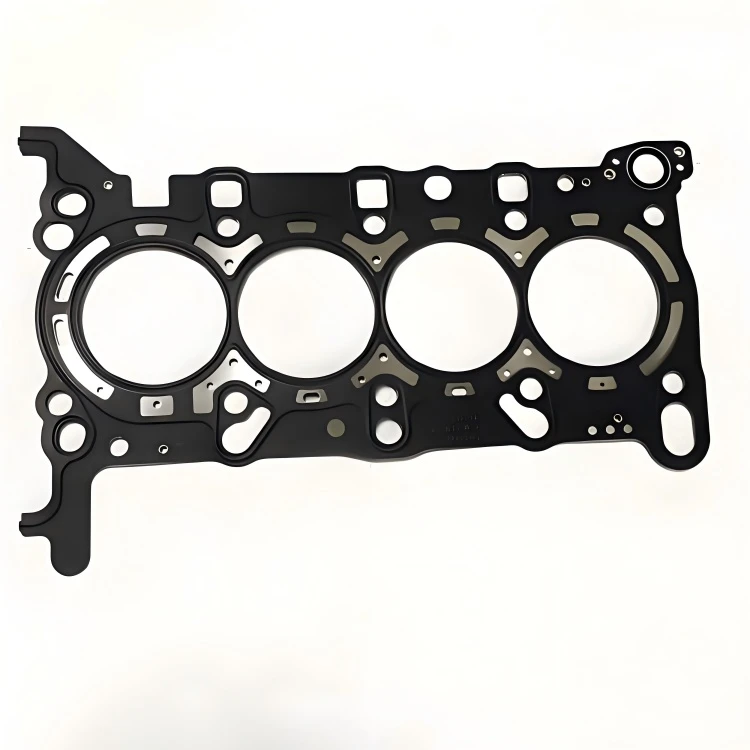
Metal cylinder gaskets are used in a wide range of applications, including automotive engines, industrial machinery, and power generation equipment. These gaskets are designed to seal the combustion chamber or fluid passages in a cylinder, preventing leakage of gases or liquids.
During operation, the temperature inside the cylinder can vary significantly. For example, in an automotive engine, the temperature can reach several hundred degrees Celsius during combustion. As the temperature changes, the metal cylinder gasket and the surrounding components (such as the cylinder head and engine block) will expand or contract according to their respective thermal expansion coefficients.
If the thermal expansion coefficient of the metal cylinder gasket is significantly different from that of the surrounding components, it can lead to several problems. For instance, if the gasket expands more than the cylinder head and engine block, it may be compressed too tightly, causing it to deform or even break. On the other hand, if the gasket expands less than the surrounding components, it may not provide a proper seal, leading to leakage of gases or liquids.
Therefore, it is crucial to select a metal cylinder gasket with a thermal expansion coefficient that is compatible with the surrounding components. This ensures that the gasket can maintain a proper seal under different operating temperatures, improving the reliability and performance of the equipment.
Factors Affecting the Thermal Expansion Coefficient of Metal Cylinder Gaskets
The thermal expansion coefficient of a metal cylinder gasket depends on several factors, including the type of metal used, its composition, and its microstructure.
Type of Metal
Different metals have different thermal expansion coefficients. For example, aluminum has a relatively high thermal expansion coefficient (α ≈ 23 × 10⁻⁶ /°C), while steel has a lower thermal expansion coefficient (α ≈ 12 × 10⁻⁶ /°C). When selecting a metal for a cylinder gasket, it is important to consider the thermal expansion coefficient of the surrounding components and choose a metal that is compatible.
Composition
The composition of the metal can also affect its thermal expansion coefficient. For example, adding alloying elements to a metal can change its crystal structure and atomic bonding, which in turn can affect its thermal expansion behavior. In some cases, alloying elements can be used to reduce the thermal expansion coefficient of a metal, making it more suitable for use in high-temperature applications.
Microstructure
The microstructure of the metal, such as the grain size and orientation, can also influence its thermal expansion coefficient. A fine-grained microstructure generally has a lower thermal expansion coefficient than a coarse-grained microstructure. Additionally, the orientation of the grains can affect the anisotropy of the thermal expansion, which means that the thermal expansion coefficient may be different in different directions.
Measuring the Thermal Expansion Coefficient of Metal Cylinder Gaskets
There are several methods for measuring the thermal expansion coefficient of a metal cylinder gasket. One common method is the dilatometry method, which involves measuring the change in length of a sample as its temperature is increased or decreased.
In a dilatometry experiment, a small sample of the metal cylinder gasket is placed in a dilatometer, which is a device that can accurately measure the change in length of the sample. The sample is then heated or cooled at a controlled rate, and the change in length is recorded as a function of temperature. The linear thermal expansion coefficient can then be calculated from the slope of the curve of length change versus temperature.
Another method for measuring the thermal expansion coefficient is the X-ray diffraction method, which involves analyzing the change in the crystal lattice spacing of the metal as its temperature changes. This method can provide more detailed information about the thermal expansion behavior of the metal at the atomic level.
Selecting the Right Metal Cylinder Gasket Based on the Thermal Expansion Coefficient
When selecting a metal cylinder gasket, it is important to consider the thermal expansion coefficient of the surrounding components and choose a gasket with a compatible thermal expansion coefficient. Here are some tips for selecting the right metal cylinder gasket:
- Understand the operating conditions: Determine the temperature range and the type of fluids or gases that the gasket will be exposed to. This will help you choose a metal that can withstand the operating conditions.
- Consider the compatibility with the surrounding components: Check the thermal expansion coefficient of the cylinder head and engine block, and choose a metal cylinder gasket with a similar thermal expansion coefficient. This will ensure a proper seal under different operating temperatures.
- Consult with a supplier: As a Metal Cylinder Gasket supplier, we have extensive experience and knowledge in selecting the right gasket for different applications. We can provide you with technical advice and recommendations based on your specific requirements.
Our Metal Cylinder Gaskets
At our company, we offer a wide range of Metal Cylinder Gaskets that are designed to meet the diverse needs of our customers. Our gaskets are made from high-quality metals, such as stainless steel, copper, and aluminum, and are carefully engineered to have a thermal expansion coefficient that is compatible with the surrounding components.
One of our popular products is the High-Seal Cylinder Gasket, which is designed to provide a superior seal even under extreme operating conditions. This gasket is made from a special alloy that has a low thermal expansion coefficient, ensuring that it can maintain a proper seal as the temperature changes.
Conclusion
The thermal expansion coefficient is an important property of a metal cylinder gasket that can significantly affect its performance and reliability. By understanding the thermal expansion coefficient and its impact on the gasket, you can make an informed decision when selecting a metal cylinder gasket for your application.
If you have any questions or need further information about our Metal Cylinder Gaskets, please feel free to contact us. We are committed to providing our customers with high-quality products and excellent customer service. Let's work together to find the best solution for your sealing needs.

References
- Callister, W. D., & Rethwisch, D. G. (2014). Materials Science and Engineering: An Introduction. Wiley.
- Askeland, D. R., & Phule, P. P. (2012). The Science and Engineering of Materials. Cengage Learning.


